Category: lives

  • Rhizomatic threads for a friend #1

    curious face on the wall_34183397

    Adam Curtis, who is one of the most interesting film-makers in/from the UK at the moment, produces these fascinating documentary/filmic essays where he trawls the archives and retells histories that lie just under our consciousness.  His BBC blog is over here http://www.bbc.co.uk/blogs/adamcurtis/ and some of his films seem to be available via this blog (http://adamcurtisfilms.blogspot.co.uk/) and over here (http://thoughtmaybe.com/by/adam-curtis/).

    ‘It felt like a kiss’ and ‘The century of the self’ are both great.  On his blog there was also this fascinating essay on the interface between ghost stories and the tv – http://www.bbc.co.uk/blogs/adamcurtis/posts/the_ghosts_in_the_living_room

    There is an amusing criticism (‘he’s all style over substance’) over here (http://youtu.be/x1bX3F7uTrg) which is witty (if a little light on content itself).

  • Vide, Aude, Tace

    Vide, Aude, Tace

    Pagans, occultists and magicians seem increasingly incapable of being silent.  The horizon of the occult community seems increasingly dominated by the rapid rise of publications, books and trinkets for sale and the increasingly vociferous voices that seem insistent on telling us how it is.  The noise is almost overwhelming, the signal increasingly distorted.

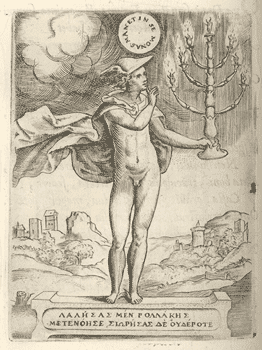
    HermesasHarpocratesHarpocrates, son of Isis and “the god who holds his tongue, and urges silence, thumb in mouth”, has long been a favourite figure amongst magicians.  Usually the connection is with the notion of secrecy, one shared by the masons in the figure of Angerona.  It is the association with secrecy that has been the reason the lesson of silence has slipped away from too many within the pagan, occult and magical community.

    Secrecy is connected with abuses of power, with manipulation and exclusion and often rightly so.  The power of secrecy is partially connected to its capacity to manipulate so this is unsurprising.  It has, like many substances, a pharmakon nature – too much is a poison, just enough is efficacious, but how much is just enough?  Yet Harpocrates is not simply about secrecy, it is the source for the ‘sign of silence’, of the ‘Tace’ in the motto Video, Aude, Tace – to see, to dare, to be silent.  Secrecy and silence are not the same, though closely related.  Secrecy, if just enough is taken, can be a means of binding together those who are allowed into a group and hold its secret as the thread of their interiority as well as a tool for prompting direct experience as one searches for the secret.  Silence, on the other hand, is a source of self-control and a means for opening the ear onto the world.  It is also a consequence of the realisation that all occultists should hold as first principle – words are power.  To speak is to act.   If one insists on simply speaking all the time then most likely what occurs is a directionless acting.

    In our current Western society this notion of silence – of ‘holding your tongue’ – goes against much that informs the implicit imperatives of capitalism.  The idea that one should ‘express yourself’ or ‘speak truth to power’ are thought to be liberating and important to hold to, although this is actually a doubtful truth.  Occasionally these ideas may apply, occasionally, but in general the rule ‘hold your tongue’ has more sense and should perhaps be the default.  Unless absolutely necessary and no other course is possible, holding ones tongue is usually the least damaging course of action – and for one, very simple reason.  To act is to assume knowledge and has great risk because it is almost always certain that something in that situation we are acting on is beyond our knowledge.  To act is to trust in ourselves that our act is a positive effect on the world and such trust should be assumed only with some humility.  To act is to dare.

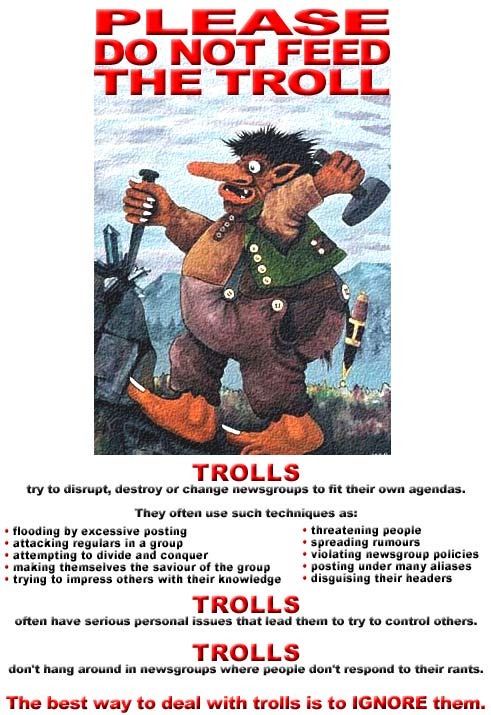
    Please_Do_Not_Feed_The_TrollSilence also has other benefits.  In communities that exist online, in social media like facebook, forums and blogs, it is too easy for conversations to become explosive.  This is a long recognised factor in internet communication in general and  led to the early identification of the fairy figure of the Troll.  Once identified it was also recognised that the only effective way of dealing with Trolls is to stop feeding them, hence the numerous DNFTT acronyms that sprung up in early forms of the ‘net.  The role of the social media in community life, particularly in small communities of affinity, is highly problematic.  It mitigates against the possibility of silence, because anyone anywhere can simply blurt out anything they want.  Moreover those words, often spoken in haste, drunkenness or anger, can then remain indelibly etched onto the record, lingering and mouldering.   In addition these social media continue on 24/7 whereas the actual community of bodies may only meet once every now and then.  The social media, once thought to facilitate, now becomes dominant and the body meetings become distorted through the continuous presence of the online, often unthought, words that never seem to cease being spoken.

    It’s not only social media, however, that brings the problem of too much talk, it’s also the ‘literary’ nature of many communities, the absence of the oral imperative.  With the amount of books, magazines, journals, musical compositions and media in general people begin to become part of a community only through these disembodied extensions of their selves.  Instead of these media becoming aids and providing assistance, as tools, to a more profound and rounded (body included) community, what tends to occur is that the community disappears into the tools, the texts and medias that fly forth in an era of increasing expression.  This then produces a curious dynamic, whereby if one doesn’t ‘produce’ these things then one doesn’t exist.  The dynamic is to force people to speak, to produce, to ‘express themselves to exist’.  Even when they do produce, however, the drive of the form insists that once is not enough, they must do it again, and again, junkie to the new ephemerality of the mass media form.

    In all of this, in the online disputes, the flood of new productions, the trivialisation and – let’s be frank – increasing stupidity and tedium of these expressions, all that is occurring is the gradual assimilation of the occult community into the wider capitalist imperative (eat, consume, die).  The occult spark itself will dwindle inside these communities, taken up and living on elsewhere, in secrecy and silence.  The occult communities will be unlikely to learn those lessons it needs to as long as it maintains its incessant cacophony of expression, its incessant drive to talk rather than listen, its incessant failure to learn the lesson of silence.

    Consider for a moment what exactly would be lost if everyone simply shut up for a year.  Instead of writing that new article, posting that oh so necessary comment on the latest crucial problem that has flared up online or getting the latest piece of media online and sold out, just shut up and listen.  Stop talking, producing, insisting on expressing yourself.  Stop and read, stop and wait, stop and just be, for a while, someone who watches and sees, who watches and sees not just what others say but how you react to that, how it makes you feel, what it makes you think, what you might learn.  Allow the world to be something your own existence is part of, allow yourself to be visible not to others but to yourself.  Then, before opening your mouth again, think about whether there is a positive answer to the question – do I need to say this? Note that this is not the question, do I want to say it but do I need to say it?  If that need is only for yourself, only because you feel you would burst without saying it, then your are – and should recognise – inflicting yourself on others.  This is not something to be shunned.  At times it is perhaps vital to someone’s spirit to do so but it is, nevertheless, an infliction, not a liberation.  It is necessary to scream into the void at times, but it is still a scream.  We might sometimes need to scream but we must want to stop, to be at a point when the scream is not dragged from us.  We must want to be able to be silent, to desire that calm being of a moment of peace and quiet.  If that desire is to be fulfilled then we, too, must become part of the silence, not the constant, oppressive, cacophony. The lesson of silence is not, in its heart, one of oppression but one of liberation.

  • The call of the woods

    The call of the woods

    For the last two or three years I have been mainly working within temple spaces.  These have varied from rooms booked in community centres to my own altar space. The one thing shared by these various spaces however is that they are indoors. This might seem obvious and inconsequential but in fact for most of the time on my path I have worked outdoors. I always used to work indoors as well but the vast bulk of my work, celebratory or ritual, was outdoors.

    (more…)

  • On Catkins and Lawrence

    ‘Do you really think, Rupert,’ she asked … ‘do you really think it is worth while?  Do you really think the children are better for being roused to consciousness?’ …

    ‘They are not roused to consciousness,’ he said, ‘consciousness comes to them willy-nilly.’

    ‘But do you think they are better for having it quickened, stimulated?  Isn’t it better that they should remain unconscious of the hazel, isn’t it better that they should see it as a whole, without all this pulling to pieces, all this knowledge?’

    ‘Would you rather, for yourself, know or not know, that the little red flowers are there, putting out for the pollen?’ he asked harshly …

    ‘I don’t know,’ she replied …

    ‘But knowing is everything to you, it is all your life,’ he broke out.  She slowly looked at him.

    ‘Is it?’ she said.

    ‘To know, that is your all, that is your life – you have only this, this knowledge,’ he cried, ‘There is only one tree, there is only one fruit in your mouth.’

    … She was sometime silent.  ‘Is there?’ she said at last, with the same untouched calm.  And then in a tone of whimsical inquisitiveness:  ‘What fruit, Rupert?’

    ‘The eternal apple,’ he replied in exasperation, hating his own metaphors.

    ‘Yes,’ she said.  There was a look of exhaustion about her.  For some moments there was silence.  Then, pulling herself together with a convulsed movement, Hermione resumed, in a sing-song, casual voice.  ‘But leaving me apart, Rupert; do you think the children are better, richer, happier, for all this knowledge; do you really think they are?  Or is it better to leave them untouched, spontaneous.  Hadn’t they better be animals, simple animals, crude, violent, anything, rather than this self-conscious, this incapacity to be spontaneous.’ … ‘Hadn’t they better be anything than grow up crippled, crippled in their souls, crippled in their feelings – so thrown back – so turned back on themselves – incapable – ‘  Hermione clenched her fist like on in a trance – ‘of any spontaneous action, always deliberate, always burdened with choice, never carried away.’ … ‘Never carried away, out of themselves, always consciousness, always self-conscious, always aware of themselves.  Isn’t anything better than this?  Better be animals, mere animals, with no mind at all, than this, this nothingness -‘

    ‘But do you think it is knowledge that makes us unliving and self-conscious?’ he asked irritably.

    She opened her eyes and looked at him slowly.  ‘Yes,’ she said.  She paused, watching him all the while, her eyes vague.  The she wiped her fingers across her brow, with a vague weariness.  It irritated him bitterly.  ‘It is the mind,’ she said, ‘and that is death.’  She raised her eyes slowly to him:  ‘Isn’t the mind – ‘ she said, with the convulsed movement of her body, ‘isn’t it our death?  Doesn’t it destroy all our spontaneity, all our instincts?  Are not the young people growing up today, really dead before they have a chance to live?’

    ‘Not because they have too much mind, but too little,’ he said brutally.

    ‘Are you sure,’ she cried, ‘It seems to me the reverse.  They are over-conscious, burdened to death with consciousness.’

    ‘Imprisoned within a limited, false set of concepts,’ he cried.

    But she took no notice of this, only went on with her own rhapsodic interrogation.  ‘When we have knowledge, don’t we lose everything but knowledge?’ she asked pathetically.  ‘If I know about the flower, don’t I lose the flower and only have the knowledge?  Aren’t we exchanging the substance for the shadow, aren’t we forfeiting life for this dead quality of knowledge?  And what does it mean to me after all?  What does all this knowledge mean to me?  It means nothing.’

    ‘You are merely making words,’ he said; ‘knowledge means everything to you.  Even your animalism, you want it in your head.  You don’t want to BE an animal, you want to observe your own animal functions, to get a mental thrill out of them.  It is all purely secondary – and more decadent than the most hide-bound intellectualism.  What is it but the worst and last form of intellectualism, this love of yours for passion and the animal instincts?  Passion and the instincts – you want them hard enough, but through your head, in your consciousness.  It all takes place in your head, under that skull of yours.  Only you won’t be conscious of what ACTUALLY is; you want the lie that will match the rest of your furniture … It’s all that Lady of Shallot business,’ he said, ‘you’ve got that mirror, your own fixed will, your immortal understanding, your own tight conscious world, and there is nothing beyond it.  There, in the mirror, you must have everything.  But now you have come to all your conclusions, you want to go back and be like a savage, without knowledge.  You want a life of pure sensation and “passion”.’

    He quoted the last word satirically against her.  She sat convulsed with fury on violation, speechless, like a stricken pythoness of the Greek oracle.

    ‘But your passion is a lie,’ he went on violently.  ‘It isn’t passion at all, it is your will.  It’s your bullying will.  You want to clutch things and have them in your power.  You want to have things in your power.  And why?  Because you haven’t got any real body, any dark sensual body of life.  You have no sensuality.  You have only your will and your conceit of consciousness, and your lust for power, to KNOW …

    ‘Spontaneous!’ he cried.  ‘You and spontaneity!  You, the most deliberate thing that ever walked or crawled!  You’d be verily deliberately spontaneous – that’s you.  Because you want to have everything in your own volition, your deliberate voluntary consciousness.  You want it all in that loathsome little skull of yours, that ought to be cracked like a nut.  For you’ll be the same till it is cracked, like an insect in its skin.  If one cracked your skull perhaps one might get a spontaneous, passionate woman out of you, with real sensuality.  As it is, what you want is pornography – looking at yourself in mirrors, watching your naked animal actions in mirrors, so that you can have it all in your consciousness, make it all mental.’ …

    ‘But do you really WANT sensuality?’ [Hermione] asked puzzled.

    Birkin looked at her, and became intent in his explanation.  ‘Yes,’ he said, ‘that and nothing else, at this point.  It is a fulfillment – the great dark knowledge you can’t have in your head – the dark involuntary being.  It is death to one’s self – but it is the coming into being of another.’

  • Wormwood

    a Journal about fantasy, supernatural and decadent literature

    Edited by Mark Valentine

    Issue 10, Spring 2008

    The Void Behind the Face of Order:

    Robert Aickman, Anthologist of the Ghost Story by Peter Bell

    No Secret Place: The Haunted Cities of Fritz Leiber by Joel Lane

    Sand in the Machine: The Radio Play Träume (Dreams) by Günter Eich by John Howard

    Kenneth Grant: True Tales, Ancient Grimoires and Magical Fiction by Dave Evans

    Elementals and Others: The Fiction of Michael McDowell by Mike Barrett

    The Decadent World-View by Brian Stableford

    Late Reviews by Douglas A. Anderson

    Camera Obscura

    £8.99 including p&p

    http://www.tartaruspress.com/wormwood10.htm

  • Fugitive thoughts

    Silence doesn’t exist.  Everything just keeps happening, in my head, in my body, all around me.  It’s so noisy here.  I’m a victim of my own consciousness, or inconsequentialness, or, or, or … the words have already gone.  My brain is intransigent.  My thoughts are fugitives.  My ideas suffer from chronic erosion.  I’m working at the rock face but there are no gems.

    My head, my thinks, they’re fissured, constantly deteriorating, or petrifying (I’m petrified, like stone, like a kid in a corner when there’s nowhere left to go), or liquefying (like a Photoshop effect, or garbage kept too long), or coagulating (like an unwelcome menstruation that starts when I’m sleeping and crusts itself around my sex).  Words rot.  Meat.  Bad meat.  Love.  Bad love.  Trash everywhere.

    ‘The real pain,’ he said, he said from his bed, which wasn’t so far from her grave, ‘Is to feel one’s thoughts shift within oneself’.  He didn’t mean change and move and develop.  No.  He was talking about the ravaging stupor, when words become knives, or falsettos that reach a clamoring pitch, until intuition itself is convulsed and frothing.

    I can’t posses them, thoughts, words, they’re elusively inchoate, mortarhate, more to hate … Knowledge must explode in the reader’s mind.  I have a recipe for a car bomb.  Knowledge must violate the self protective distance between reader and text.  Has anyone got a gun?  Do you ever think the unthinkable?

    He said, that time I saw him, puking and shivering, ‘We are born, we live, we die in an environment of lies’.  I want to rebel.  I cannot stand these lacerated perceptions, these scrapings of my soul.  How do you do this?  How do you fabricate and elucidate and communicate?  I can’t do this.

    My conscious aggregate is broken.  There is no cast, there are no pins, no analgesic, nothing that can eviscerate or repair.  I’m stuck here, with my sandy thoughts and vacuous words, inhabited by incomplete abortions, strangulated by the tight bands of ‘Yes’, ‘No’, or ‘Don’t know’.

    I wish to be a dissident, from my madness, from my work, in my madness, in my work, but madness, suffering and silence evade co-option – what does that even mean?  That doesn’t make sense.  Is that necessary?  Sense and Sensibility.  Damn you Jane Austen.  Name dropping, not good.

    ‘I have decided,’ said the woman with the coffee coloured hair and the coffee coloured skin and the coffee smelling breath, ‘That I shall not be performing this evening.’  Who the hell are you?  Fuck off.

    I was bent on my knees, and I thought he would turn to face me, but instead he presented his arse.  Goldfish.  Go away.  Go Away.  GO AWAY.

    ‘A true man has no sex,’ he’s looking at me over his shoulder, his testicles are swinging like a mountain goat’s, ‘He ignores this hideousness, this stupefying sin’.  If he farted now I could see the wrinkle of his anus project a word.

    ‘You’re talking through your arse again.’
    ‘And you’re listening.’

    Riviere talks about ‘The blessed opacity of experience,’ how lovely.  I wonder if he could strike me blind.  ‘Hello, I’m eyeless in Gaza,’ but that’s all some great analogy for something I’ve never read and probably wouldn’t understand.

    Fuck, I love this lash of madness.  We’re the heroes you know, the blind and insane.  We’re the martyrs of thought, stranded at the point of extreme social distinction.  We know so much truth that society takes its revenge on us …

    I don’t know what else to say.  I’m going to get stinking drunk and piss in the garden.

    ……

    Hagiography