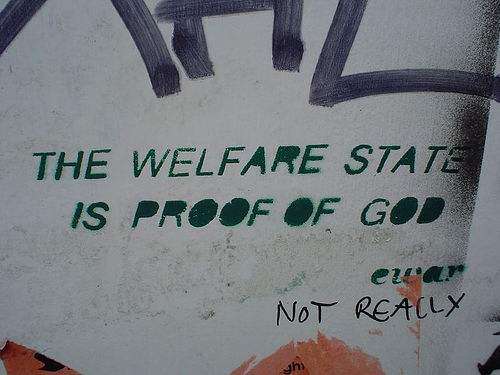
 Philosophers no longer talk about God and if they do nobody listens. At the time of Leibniz and the Enlightenment the reverse was the case – philosophers always talked about God and if they didn’t then nobody listened. This, no doubt, was a hangover from the impregnation of Christianity that occurred in the middle ages, during which time the bastard child of philosophy and Christian apologetics is produced, what Heidegger would later call ‘onto-theology’. Being (the ontos) is spoken of within the framework of God. This is the butchery of philosophy by Augustine and Aquinas, the butchery of pagan thought by monotheistic madness. A language and framework that is in effect absent from the initial movements of Socrates and Plato comes to dominate any attempt to think. To think without God becomes, by the time of the Leibniz, almost impossible. At the same time, to think with God also becomes almost impossible. Thought is threatened by God since metaphysical abstractions now implicate God. The situation is analogous to artists under Stalin’s regime. To speak is to speak of God – or Stalin – and so to speak is to invoke danger and attention, not always a good idea.
At the heart of Leibniz is a peculiar pairing of two seemingly opposed ideas that produces a problem. On the one hand there is the idea that the world – Being – must have a necessity to the way it is. On the other hand there is the idea that God – the supreme Being – must be free and ultimately unconstrained by anything, including any necessities of mere matter. We can encounter this problem in the following way. Let us assume that God exists and has created the world, indeed all of Being. Let us also assume, following Leibniz for a while, that the world which exists is ‘the best possible world’. Now Leibniz wants to argue that the world is the best possible world because it must be the best possible world – it is not the best by accident but because only the best possible world could exist. Thus, if God created the world and it is the best possible world is it the best possible world because God created it or did God create it because it is the best possible world.
The problem is right here – was God forced by ‘some sort of necessity’ to create the world as it is because it is the best possible world that there could be? Did God have no choice over how the world is – or even that the world is? If this is the case, then God is powerless in the face of this necessity – nothing more than an empty origin.
The situation gets worse, however, if we try and say that the world is the best possible world because God created it. If God is free to create any world and the world that is created is the best possible world then we can ask why is this world better than any other? It must be because God chose the best, between more than one option– but for it to be the best there must be some reason that can be given, it must be more than a mere whim of God. God, then, becomes again subject to the reason behind the choice of one world over another and couldn’t have acted freely if he acted rationally since he would have had no choice. Alternatively the world is a mere whim and in that case it cannot be said to be in any real sense the best. Either the world has a necessity – in which case God is subject to that necessity – or it is a mere whim, in which case it might very well have been different, indeed it might still now be very different from the way we experience it. If the world is a whim of God we are left with the problem of the Caliph’s vision1.
It’s not just Leibniz who works with this difficulty. In Descartes too we find the problem of why and how God relates to Being. If God is given complete freedom then what’s to stop him from having a huge joke at our expense? What prevents God from making the false seem true and the true seem false, from making the appearance radically different from the reality? If we respond, because God is good, then surely if God is good he would have created the best of all possible worlds and then we are back to the lack of freedom on the part of God. God is free and the world is possibly a joke or the world is necessarily the way it must be – the best – and thus God is no more and no less free in his creativity than the mathematician is in the production of a solution to a given problem.
1 Nicholas Rescher, following Bertrand Russell, poses the problem as a formal dilemma and as follows – ‘According to the Principle of Perfection [what I have been referring to here as ‘the best of all possible worlds] God acts in the most perfect way possible with regard to the creation of the world, and he does so either necessarily or freely. If he does so necessarily his freedom is destroyed, and all that follows as a result of his perfection – i.e., everything that happens in the world – is necessary. If he does so freely, in accord with Leibniz’s principle, a sufficient reason must be adduced for this free act, and this in turn must be either free or necessitated. Thus an infinite regress is initiated.’ (Rescher, 1967: 43-44) Rescher’s formulation of the formal problem (that of an infinite regress) avoids the problem of the powers or forces at play in the inter-relation between the concepts of God and Necessity.



 razorsmile :: philosophy//magic //revolution