
I’m using video streaming as part of my work at the moment. Beginning last week – 3rd August – I’m trying to do a Philosophy Research Discussion online. I missed this week, due to feeling really unwell with heat exhaustion, but the last session had 3 or 4 ‘sections’ to it. I’m cutting those up and uploading to YouTube at the moment and this is the first of those edits, primarily intended for Eric Harper who I’m working with on a project. It discusses something Deleuze said to a friend about what makes a worthwhile book, and I reflect on this with regard to our project.
Category: for eric
-

Notes for Eric #5
Group formation I mentioned earlier that the assemblage, the community, is never static and can become something reactionary as well as revolutionary. The group is also an assemblage, and my first thought is about the difference in the assemblage ‘group’ and in the assemblage ‘community’. They obviously share a lot of features – not least being that they can become reactionary as well as revolutionary. They can fuck you up as much as lift you up.
Maybe there’s a difference in scale between a group that is reactionary (fucking you up) and one that is revolutionary (lifting you up) – one that is felt acutely, if incoherently, by anyone involved in revolutionary groups – but I think it’s not really about scale directly. They fuck you up as easily as they lift you up if you’re not careful, but if you are careful then they are the only way in which some which of our capacities can be expressed.
That ‘be careful’ is often taken as a warning but it shouldn’t be, at least not all the time. It’s all in the tone, perhaps, which never comes across so easily online as in a face to face setting (or at least, we tend to think it doesn’t). Is it too easy to just play with the words? Careful, full of care. And who can be full of care all the time? Maybe it’s a function that exists, as Guattari might say, transversally, that only exists in so far as it cuts across a series of ‘care full filling practices’ that are being carried out by different individuals and sub-units of a group, or community.
There’s an interesting connection between ‘care’ and group or community. As assemblages they differ in the way that ‘care’ can be given, or received. I think in some sense the feeling of what care is, differs from group assemblage to community assemblage in such a way as to distinguish the one from the other. There’s that thing about scale again, at what scale do I encounter care (either in terms of giving, receiving or noticing)? At its most intense it’s thought to be commonly found at the one to one level, but this seems like it will feel different from what we’ll find at the group level and then again different at the community level, and I almost feel like I might be able to navigate the movement from one space to the other by the feel of the care relationship that exists, or has the potential to exist (whatever that might mean).
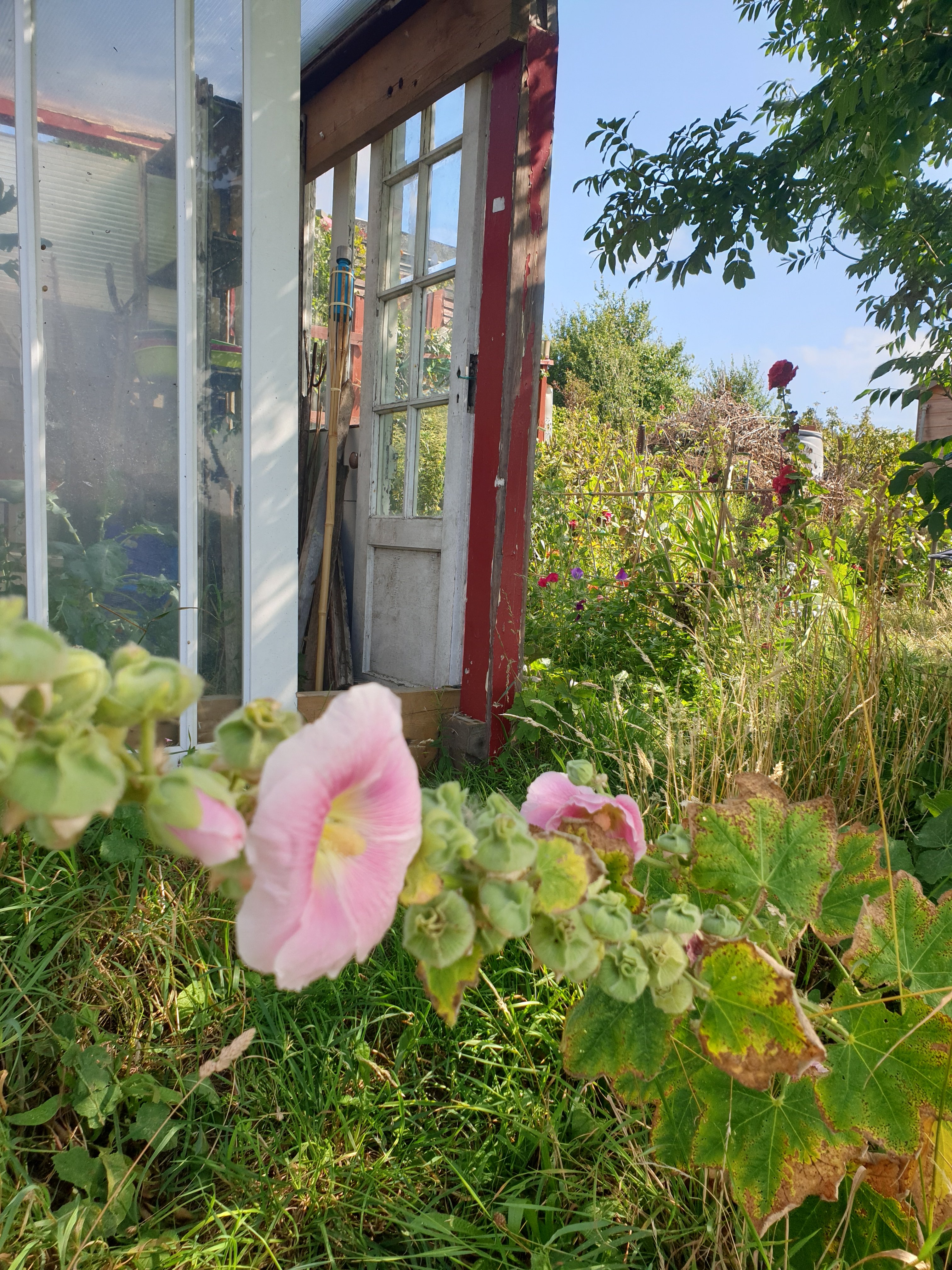
Summer time This week I rode to Bristol for the Plan C Congress. It’s the second longish ride out on the new bike, previously I rode to just outside Sheffield. Interestingly enough, that was to go to Plan C Fast Forward Festival. Obviously I don’t travel widely unless it’s for something kind of political. Both times the rides to the venues were done in the pouring rain, although both times I also got sun filled rides home, even if the roads were still wet in places. As I came into Sussex, I rode down the B2141, one of those curious roads seemingly in the middle of nowhere but which is in pretty decent nick. So many of the roads I ride appear to be fucked up it’s noticeable when you get a well maintained, or newish, bit of tarmac. Things flow well on good roads. In the middle of this moment, filled with all that lush green countryside, there was the body of a roe deer, lying full and large on the left hand side and I slowed as I passed it, checking in. It was clearly dead, ‘roadkill’. At what scale does my care for that doe get to be felt? It kind of bounces around, shifting the resonances after the encounter.
-

Notes for Eric #4
https://youtu.be/c2m-FfP1UDQThis week I began teaching ‘Schizoanalysis for Beginners‘ again. I haven’t taught it for 4 years and haven’t spent time reading Anti-Oedipus all the way through for maybe two or three years. I return to it quite regularly but in chunks and so it’s interesting to begin reading through it again, in a new space and time, in a new setting. I’m finding it shouts at me, it’s speed and all the connections it sparks once again being mobilised but this time the machine is one I’ve had around for a while and that hasn’t been oiled properly, so in getting it going again I’m noticing the creak of my old bones.
Machines and assemblages have this curious entropy that we all probably are familiar with. Paint peels, rooms get dusty. I’ve gathered a shelf full of tools and potions to accompany my motorbike and recently we got a new set of shelves for the kitchen to put these things on. We got them cheap, of course, and this week we had to remove them, a failed experiment, they were bowing under the weight of the tools. So the shelves came down and everything on them was piled back into the ‘study cum temple space cum living room cum bedroom basement space’ next to our kitchen. Inside my house, where I work, the study and the altar – the two space that I relate to mostly in the sitting position – form little zones of ‘stillness’ or ‘sitting’ amidst a myriad of mixed elements. In the other corner is my partners work zone. Across the walls are elements of mnemonic tech for when I’m working in a standing position, doing some kind of standing meditation or ritual, or shelves of books and notes that attach themselves like invisible threads to my desk and words via my body, hands, brain and eyes. Constantly these things fill up, break down, need cleaning and re-arranging.
The sun shone yesterday and I rode out. Bikes have to be ridden regularly or be put into hibernation properly. If not ridden regularly they can get cranky, rust up, deposit crud in the fuel lines. Engines generally need to work regularly. They need to flow, heating up and cooling down, lubricating their elements, breathing.
As always, the wind is met at about 60 to 70mph. I crouch forward across the tank, let my hands relax on the bars, grip in with my knees and lean the bike as the road curves, feeling a joy that only speed, machine, body and noise can bring. The wind is noisy, rushing and howling across my helmet, buffeting my chest, filling the space, underneath the engine runs hard, never able to drown out the wind. On the outside, across the way, the walker can only hear the engine, the roar of that machine, but inside only the wind. As I slow down I sit back up, my body catching the wind and the resistance braking the bike as I slowly grip the lever harder. Everything works together, actively, a group of flows distinct from the passive cages of the cars that surround me, where the individual is anaesthetised behind a mediation of technology. Soon the driver will be redundant in the car, sleeping or watching a screen inside the beautiful robots that will carry them, like gestating foetuses, to their promised land.
You refer to Foucault and his thoughts about community in the draft chapter. Foucault is apparently ‘the most cited researcher across all fields’ ( https://foucault.info/articles/#citation_ref_1 ). On Google Scholar, which is this curious machine to ‘measure’ the value of academic work on the basis of the criteria of citations, that is, on the basis of how many times someone has referred to them. Foucault citations seem to peak in 2016. Of course this data is no doubt deeply flawed, not least because it probably depends on how it is sourced, when such measuring started and other factors that are quite contingent on curious accidents of knowledge production. Yet I had a small smile to myself. We’ve passed peak-Foucault. I’m not unhappy about that.

There are, as you note, three types of community that are spoken about by Foucault – the given community I identify with, the tacit community that sets the conditions of membership and the critical community of freedom, where the individual is able to reach themselves in so far as they find the community ‘intolerable’. Freedom comes with critical distance it would appear. Yet again, as with Benjamin, this relationship can easily seem to be set up as being between two nodes – the community and the individual – and this seems to start from somewhere that prevents positive movement. I can’t help but feel that the ‘critical distance = freedom’ position is just another form of saying ‘we academics, with our critical skills, are the ones who are truly free’. Nothing is more self-indulgent bullshit than the idea that academic knowledge produces freedom, and individuals who hold to this seem to be self-deluded, making excuses for their own choice of survival. We all have to survive. I hold no-one to account for the necessity of their survival strategy. When in prison the books people sent were exactly that, survival strategies. As I read, I slipped the bars, and explored new lands of thought and sensation. As I began to learn I felt the exhilaration of the ‘critical distance’. The capacity to produce my own values, to become autonomous, or to feel autonomous to be more precise, grew and eventually this was the background for my own entry into academia. Yet my story is incomplete if it reads too quickly as ‘books let me escape’. This was only a background condition and one that wasn’t completely neutral.
In prison I learned more than just how to read a lot, something I had always done. I learned to read intensely, often going over and over things, almost learning them by heart. Comrades would send me all sorts of history and political books. Amongst the various books that arrived, however, there was a set of ten Bond novels by Fleming, originals I think, in their pulp fiction covers and cream, slightly brittle paper. Those novels were odd things. I hadn’t really devoured pulp fiction before and found I could sit and read a Bond novel in an evening. Once the cell doors had shut – there was no TV in our cells in those days – I would settle down with a small blim and some of the godawful tea we picked up in our flasks before lockup and just read through a Bond novel from start to finish. It was like watching a film. When bored, or antsy and irritable and unable to concentrate on something more ‘serious’, I would return to these Bond novels and over the course of the months they formed a very strange affect, unlike anything I had encountered in reading before – they produced a kind of dream-like state of images, odd phrases and tranced breathing. They relaxed me. Gradually this affect, once built, began to transfer to other texts, sometimes poetry or biography or even – much later – ‘theory’. What it absolutely was not was a ‘critical distance’.
It’s a simplification, perhaps, to reduce the idea of a ‘critical community’ to ‘critical distance’. If becoming part of a critical community involves moving beyond a sense of ‘being an individual’, perhaps in a movement that breaks out of the dominance of this way of being, that transcends it in some sense, then it contains potentials to embrace. Yet these potentials have too easily been re-incorporated into an academic mode of being that is itself, fundamentally, rooted in proper names, individuals, careers – flows of knowledge production, recording and distribution that have been easily integrated into capitalism and which academics seem incapable, in large part, from resisting. It’s almost impossible, for example, to get an academic not to participate in the ‘paywall’, a seemingly obvious and easy step (‘free the knowledge’) but one that is constantly met with excuses of one sort or another. In this situation it is not theory that offers a route to a critical community, nor the experience of theory, but something radically outside theory that is not simply ‘practice’.
What that other thing is, outside and beyond theory or the experience of theory in ‘critical distance’, is the group. In the organisation of the three modes of being, one to one, group and community, it is the group that is often peculiarly left out, only occasionally being the focus, such as in the work of the psychoanalyst Bion. As with most psychoanalysts, of course, the ‘group’ in Bion is in fact nearly always referring to a ‘group of humans’ or a ‘group of subjects’. My own sense is that ‘group’ operates always and intimately as a form closer to ‘pack’ and animal than either of the other two modes and that this might explain the repulsion that theory and theorists have for such assemblages. The group is the first moment in which a new power is found, one which can liberate or dominate. This new power, before community and beyond the one to one, may contain capacities yet to be explored or acknowledged, threatening and intimidating capacities that are capable of making thinking something other.
-
Notes for Eric #3
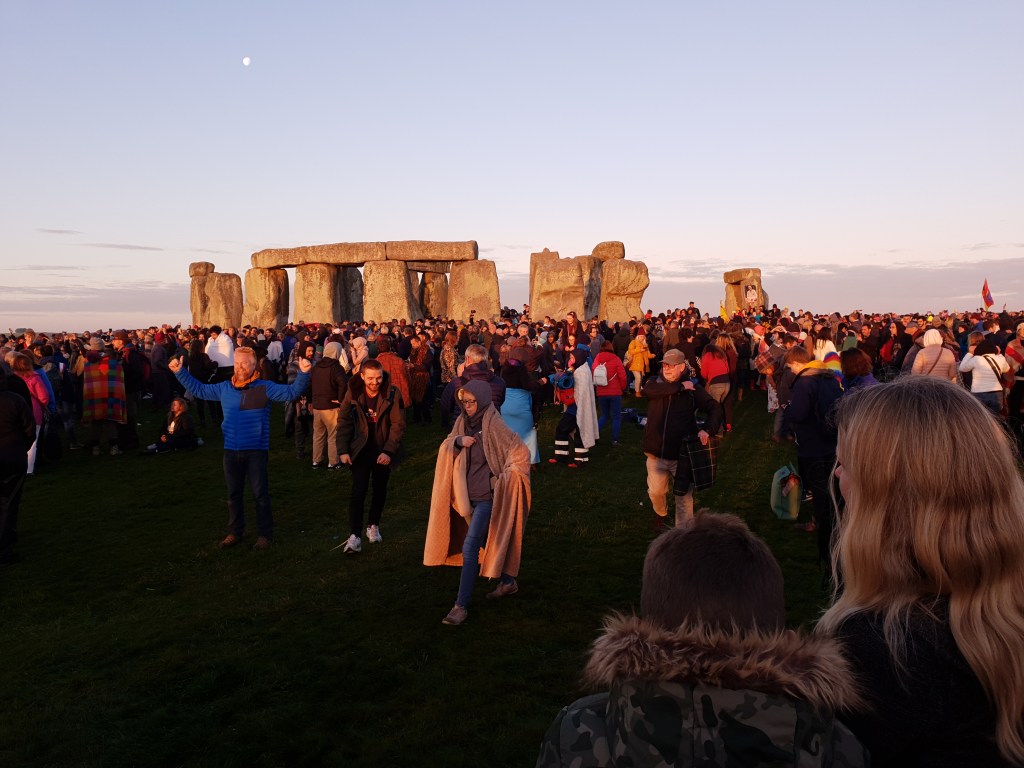
Tuesday evening. My cat, Bob, died tonight, in my arms. She had been with us 19 years. I sat with her as she passed, until the last breath and then we sat wake for her as she rested on our altar. I wanted to start this weeks notes at this point. It’s Morrigans 51st birthday. We’ve been together 29 years, married 29 too, anniversary just this 27th September gone.
The moon has just begun waxing into the October rising.
This Mortal Coil sings to the siren. The music plays, the drink and smoke.

Bob (rear) and Kismet, her daughter, Summer 2019. The next day I buried Bob, in a large planter, filling it to the brim with layers of bulbs for the spring and summer to come.
I’m trying to follow on from the previous post, and so I thought I’d reflect on the idea of taking things personally, or more accurately on how to take things personally, beyond society and towards community. This last notion, of community, seems troubling to a lot of radicals, it’s too easily bandied about as a simple positive and to such an extent that it can mask the negative role of community. To the extent that ‘community’ can become a positive notion it needs to be attached to ‘communism’, the two need to become entwined. This involves both a means of working out what the positive elements we refer to in ‘community’ are as well as working out how the ‘communist’ can form a community. The former question is perhaps more theoretical, more abstract in some ways. The latter involves those of us who are communists facing up to the challenges involved in the ways we organise and live with our comrades.
When it comes to trying to work out what a positively valued concept of community might involve there are some words from Walter Benjamin that offer a possible solution:
There is a very simple and reliable criterion by which to test the spiritual value of a community. It is to ask: Does it allow all of an individual’s efforts to be expressed? Is the whole human being committed to it and indispensable to it? Or is the community as superfluous to each individual as he is to it? It is so easy to pose these questions, and so easy to answer them with reference to contemporary types of social community. And the answer is decisive. Everyone who achieves strives for totality, and the value of his achievement lies in that totality – that is, in the fact that the whole, undivided nature of a human being should be expressed in his achievement. But when determined by our society, as we see it today, achievement does not express a totality; it is completely fragmented and derivative. It is not uncommon for the community to be the site where a joint and covert struggle is waged against higher ambitions and more personal goals, but where a more profoundly organic individual development is obscured.
The life of students, https://libcom.org/library/life-students-walter-benjaminIn some ways this quote from Benjamin illustrates what I was thinking of when I said that working out the positive elements of community might be a more theoretical or abstract question. It’s easy for me to agree with Benjamin but the ease with which I can agree also points to the shallow nature of such agreement, the fact that we’re not agreeing on much in practice. To a large extent this might be easily shown by simply thinking about who exactly might disagree with what Benjamin says here. For some, his words are convoluted and dense, so they might not agree or disagree, but would feel excluded, or angry at the ‘theoretical’ language. For others the idea of a ‘spiritual value’ might set their teeth on edge and they might never have heard much more of the quote, feeling like some religio-mystical supernaturalism was being plied on them. For others the emphasis on a community playing a role in enabling the ‘whole human being to be expressed’ might be enough, they might feel like this emphasis on the problem of alienation, on the way communities we might negatively value can isolate, alienate and separate individuals demands agreement.
Benjamin says what he says here in the context of talking about the role of Universities and students and the ways in which Universities are a kind of false community. It’s interesting that this is from 1914-15. For over a hundred years radicals have known about – and worked against – the way in which Universities suck people in to a set of values that is two-faced, purporting to free the individual whilst they construct new chains they can attach to themselves, chains they can love and defend as if they were means of freedom. The dangers of the University rest in its capacity to liberate, a process that does often truly feel like it’s taking place, often because it is, but which is constructed in such a way as to take one to the edge of freedom but never beyond. The University ‘experience’, ever increasingly the focus of the corporate University, is a double-edged sword and the radical left within the University is one of the most self-deluded elements of the wider radical community, less capable in practice of offering modes of resistance the more it increasingly theorises them. This might seem as though I am off at a tangent, and I probably am to some extent, but it’s also because it’s one of the the communities I have most long term, generally negative, experiences with.
Part of the problem here lies clearly in what Benjamin says. The relation points in his discussion are ‘the community’ and ‘the individual’ and this relationship is a mystification of what takes place, a mystification that is probably the single greatest problem inside most concepts of community. Let me try and formulate this a bit more clearly – who is it that makes up a community? It is not the individual that makes up the elements of a community, but the group. A community consists of groups not individuals, at least not individuals in the sense of singular persons, this me here. This is one of the valuable implications in beginning to think in terms of the three-fold structure of one-to-one (rather than individual), groups and community. This me here is organised by all three of these formations, all at the same time, and in a continually shifting, sliding, problematic way.

The triquetra 
The triskelion -

Notes for Eric #2
The scale of things, to come back to that word, is still troubling my thoughts. The inhuman scale of politics operates at the scale of population, community and beyond, but appears in the face of the individual, whether that individual be Trump, Johnson or Corbyn – or any number of other figures. Underneath that ‘face’ we find the ‘faceless masses’, a phenomenon not of minor or major forms but of the everyday life we lead in which we’re anonymous.
This was one of the things that was fascinating about the masks of the Anonymous movement or the Zapatistas. This displacement of the face brought to life the communities’ face, not as some kind of strange void or absent presence but precisely in the only form it could take, as a shared face. The mask forms a face for the faceless, and is deeply hated by liberal politics. It produces a community of faces, and brings with it all kinds of possible fascisms and archaic dominances – as the Anonymous ‘movement’ proved in many ways, drawing in a wide range of people who had to put a ‘face to the name’ of their oppression, too often in the form of the racialised other. Despite these possibilities, the mask also forms the community, it operates as that abstract machine that Deleuze and Guattari go on about, the crystal that co-ordinates a range of forces into an assemblage. The assemblage, the community, is never static of course, and can become something reactionary as well as revolutionary. The danger is always there, but the real question is whether the escape can take any other route? Can the revolution take any other form other than that of a mask? Does it not need to abolish the face of the individual?
You can almost hear the squeals of the liberal individualist, or the liberal socialist. No, no, never that, never the loss of my individuality. Quite right my dear. We must remain in defence of the individual and their face, or their car, or their right to eat meat, or their rights in some form or other, right up to the end, which is already upon us and which will never be allowed to stop our right to consume.
I’m being sarcastic of course, but it’s such a chore to have to extract something real from the collapse of politics into the rights of the individual that I find myself becoming irritable.
What would it mean, to abolish the face of the individual? What it doesn’t mean is to superimpose a new face onto the individual, a new totalitarian dominance. Rather, it might better take form of the short circuiting of the connection between this me here and that me there. The mask forms something like a machine for such a short circuit.

Within political life the mask has been prominent within the Zapatistas, the Black Bloc and the Irish republican struggle. The Zapatistas have no doubt articulated it in its most sophisticated form in many ways, as a form that enables participation and which challenges anonymity – the imposition of the ‘faceless mass’ – but its role as tactical necessity for the Black Bloc or within the Irish republican struggle also produced a vibrant revolutionary imaginary that short circuited the face of ‘the great leader’. It’s this thread that connects the mask to this problematic of scale, connecting the ‘community of action’ that operates at the scale of politics to the ‘practices of ethics’ that operates at the scale of the personal. The moment of ‘masking up’ shifts the person from one scale to another.
There is a curious experience that runs analogous to this but which takes it into another form, which is the motorcyclists full face helmet. As I pull my helmet over my face there is this curious movement of recombination that simply doesn’t take place when getting into a car or onto a bus or train. It’s part of a ritual that takes place before riding where the body is shifted from one set of connections into another. As I pull on my jacket, helmet and then gloves – almost always in that order, because putting a helmet on with gloves is awkward – the body slips into becoming-biker. Here too, there is an anonymity and perhaps for some a kind of threatening presence, but also a community formation. As I ride, particularly if I’m riding rather than simply going somewhere, I acknowledge other bikers as I pass them, we nod at each other, offering a gesture across the tarmac and through the speed, a gesture of connection to a face I most likely will never see. It’s one of the small joys of biking and arises from a shared need to acknowledge that what we do escapes the lines of car and carriage, at the cost of a vulnerability that is irrational and yet, for all that, deeply personal – not individual, but personal.
There, in that curious word, ‘personal’, there’s perhaps something that might enable a connection between the scale of this me here, this ‘individual’ and the me there, at the scale of the ‘political’. What is personal provides a thread through the various relations of one-to-one, group and community since the person involved in each relation is always personal. Talk of ‘the personal’ seems to fail at this point and transform something intimate into something ‘theoretical’ once again, something depersonalised. It’s always personal. This perhaps is the real thread of connection, from dreams to actions, that it’s always personal. No doubt this is such an obvious point as to seem trivial, yet my reaction to political theory, to political talk in general, still pushes me to want to stop at this point, at this point where it’s always personal.
In one sense it’s vital to a revolutionary community that the individuals involved go beyond their reactions and move towards a commons of connection that, by definition, does not yet exist. We cannot but act from the positions we are in, with all the shit that the social has burdened us with, and this involves acknowledging that those very ‘personal’ responses often don’t express much more than the social constructions of which we are part.
These social constructions form layers of complexity, as the revolutionary moves from a moment of escape from large scale social constructions into the new social construction of the revolutionary community. How much that community itself can escape is difficult to say, usually less than it believes. The single most difficult encounter for a revolutionary is with others in the revolutionary community, with the little fascisms, failures and fuck-ups that it consists of, that we are. Partly this is because the revolutionary community is, inevitably and without blame, a bad mixture of escape and retreat, variation and homogeneity; partly it is because it must impose its sociality (its’ borders and exclusions) or it dissipates within the scale of the political communities.
Within this situation that which is always personal is often a poorly masked ego that cannot but protect itself with falsehood and illusion. The ego cannot abolish itself any more than the capitalist. Thus that which is always personal is the ego, that self that has been formed if we are to avoid the asylums. Yet that which is personal beyond the self, beyond the individual, still operates as the connecting thread between the various relation formations of one to one, group and community, because the revolutionary is engaged in a transformation of that which is always personal. In some sense we are incapable of yet taking anything personally and that, perhaps, is the challenge: to take it personally, beyond society, towards community.
-

Notes for Eric #1
It’s been another couple of weeks of silence from me, but I’ve been making some minor edits on the draft chapters for part two and have decided to try and get your weekly notes to you in the form of notes in this space. It was intended as a notebook and usually works as such, so seems appropriate.
The last two or three weeks as been odd. I had a couple of weeks of intense sleeplessness – a long story – and had drifted into that strange zone of indifference, lassitude, incapacity, operating on a daily basis through some kind of residual functionalism of everyday chores, but where thought had kind of slipped into the aether. Still, a few good nights sleep seem to have pushed that aside.

August began with a ritual fire and sweat session, a return to something I was doing more intensely last year but which I took a break from during the start of 2019. It’s harvest time, physically and (otherwise), and there’s a strong sense of growth. The ritual was interesting – they usually are of course – in that it slipped on like a cloak, settled and simple and ‘slack-handed’, or at least as near to that as I can get. This was a kind of relief, as I’ve been working to lighten the grip I often feel I need on things, particularly the sorcerous, in order to let them ‘do easy’ as Burroughs used to call it and perhaps for the first time in the recent phase on work with the dragon this lighter grip seemed in play. Harvesting the work, the intention, always brightens one up. At the allotment too we’ve been harvesting – potatoes, beetroot, courgettes, beans, kale, wormwood, tansy and yarrow. I’ve been pickling beets and have a load more to do, I’ll bring a jar next time we meet.

In terms of the work, I’ve been mulling over a couple of things in my mind, the first with regard the sense or role of scale, the second to do with the way in which this inflects, infects that movement from passivity to activity that seems core to the revolutionary movement. I spoke a bit about scale in the paper at the recent workshop on Guattari and the institution, drawing on Illich and his work aound ‘iatrogenic disease’ (doctor, or medicine induced disease).
The question of scale seems almost to be co-extensive with the question of politics – at what scale does politics operate? It’s not uncommon to come across the concept of ‘micro-politics’ nowadays, a concept of the 21st century – the ‘Deleuzian century’ as the joke goes – and the ‘micro-‘ aspect of this derives in large part from Deleuze and Guattari’s schizoanalysis, with flavourings of Foucault along the way. In some ways it’s easy to relegate the micro-political to a repackaging or renaming of what, during the 1970’s, was advanced under the slogan ‘the personal is the political’, a slogan that is strongly associated with feminism but is equally applicable to the rise of black consciousness movements. In fact the ‘micro-‘ in micro-politics often presents as being associated with the personal, the individual, with consciousness as a lived experience relation to the world, and to the political. All of this is important, without a doubt, but the ‘micro-‘ here appears a bit like a jargon, a kind of posh academic way of taking over talk about the role of the personal within the political. There also seems to be something lost in translation from the distinction within schizoanalysis between the molar and the molecular, which is often cited as one of the sources of things ‘micro-political’.
Very roughly the problem seems to be something like the following – much talk about the micro stops at the individual, and yet this is not a micro phenomenon. Too often talk seems trapped within this framework of the individual, within the I rather than the We, neither going behind the back of the personal nor producing a new formation of individuation, one that would have to speak as a We, one that would be incapable of even understanding what it was to really say ‘I think…’. Yet it is here, in that which is behind the back of the person and in that which is to be formed as a people, that the revolutionary movement must construct its presence. We speak of the three grids of relationship or connection – the one to one, the group and the community – as ways of being that intersect, overlay, intermingle within the person, within the specific entity. At what scale do these grids work?
Take the moment of transition – or call – from passivity to activity that is to be found as the question ‘what can I do?’ arises. In this formation it’s difficult to connect the movement to a revolutionary horizon, a communist horizon as the contemporary phrase has it, because that relationship is blocked by the form of the question. At what scale can the answer we found here? For the revolutionary the response must almost always be something like ‘join in’, but the act of joining in is deeply troublesome when each I joins ‘actively’, bringing themselves as they are into the connection. There is little more than a cacophonous howl that is produced, much like the world of social media and internet communication, where everyone has their chance to speak, but no-one gives a shit, no-one listens. The voice is nothing without an ear, it simply howls in its isolation. I’ve been reading Doris Lessings’ book The Golden Notebooks, prompted by a Jodi Deans lecture at Goldsmith’s this year, and one of the things that is striking is that the central character, a communist and a writer, is caught between what she perceives as the pointlessness of her voice as an individual in the face of the ‘big issues’ and the almost obsessive need to talk to herself, write to herself, simply in order to be able to hear, to be able to cope with and live in the midst of those ‘big issues’. There are moments when she has to find a way of hearing herself, of hearing what she thinks or feels, moments that presuppose a kind of deafness to ourselves.
No matter how much we speak, if there is no ear it is not speech. Nothing is said before it is heard.
The one to one relationship perhaps has as its image the psychoanalytic encounter and if this is of any value then it is because it’s a space for the production of an ear, of a hearing. We speak in sorcery of ‘listening to the body’, which involves something close to colloquial concepts of intuition in many ways but which is distinct in that there are techniques that can be deployed to get the body to speak, and it’s only through working to get the body to speak that a sorcerer can begin to move towards the point at which they can listen to the body. The body doesn’t know how to speak until it is plugged into an ear, no matter how much it whirs and screams and howls. To plug into an ear, to connect an ear to a mouth, this strikes me as more fundamental even than the mouth attaching to the breast. In the breast attachment the mouth satisfies itself once the conection is made, once the flow begins, it becomes pacified. In the voice, however, the breath is transformed into the active connective formation of ear/voice, at least if the connection is productive. Too often the becoming-voice collapses into exhaustion, not even an echo chamber, simply an exhaustion.
Nietzsche in Turin.
It seems folly to ask ‘what can I do?’ with regard politics, and the folly arises because of the scale at which politics operates.


 razorsmile :: philosophy//magic //revolution