Category: art
-

Interview about Rhizomatic #1
 I was recently interview via email about the film I made a decade or so ago about an anarchist arts-activist squat. The documentary is available in various places, it was published in the Deleuzian online journal A/V from MMU (available here) and is also on YouTube (available here).
Matt Lee interviewed by Edwin Coomasaru
A Discussion of Rhizomatic #1 (2001)
1) What were the intentions and aims behind Rhizomatic #1?
I think the primary aim was the desire to show the action of the squat in a positive light, not in a simple propagandist way but more as part of the collective production that was the motivation behind the squat. We also simply wanted to make a film as we enjoyed making films and finally I found the ideas of SPOR, the use of notions of the rhizome that derived from Deleuze, whom I was very interested in at the time as I was studying his work for my doctoral project, a clear example of supposedly abstract ideas from philosophy having a direct and immediate resonance in the practical work of activists.
-
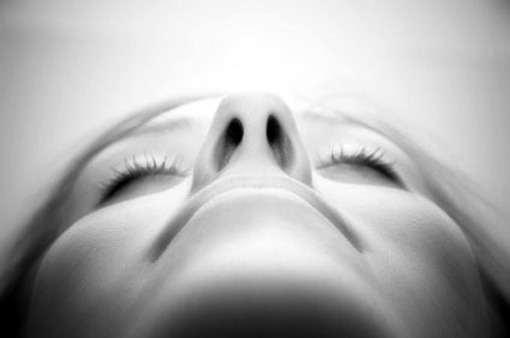
My dying breath is a magician.
 My dying breath is a magician.
This sits, written in chalk dust, on the board, bored bored bored board. Metaphor, all three elements from Aristotle, those elements it’s not supposed to have (supposedly), the tradition that’s opposed (opposedly) by Lakoff and Derrida, with metaphor as domain translations or catechresis as metaphoric literality.
The moment that is unexplainable is the new. The poetic metaphor. That which is ruled out of court or which doesn’t fit into the domain maps of Lakof (is it one F or two?) and Johnson, that which doesn’t accept itself as catechresis, which isn’t reducible to simply a concept. He focuses on one moment. For some of the terms of the proportion there is at times no word in existence; still the metaphor may be used. Each time the word that seems to be used is a good metaphor and allows someone to see something.
I never know what to make of this. I remember a long time ago a science fiction story about a community of blind people, about the way in which they adapt their social environment to become a touchable space and interlacing bodies, about – I think – someone on the run who takes refuge in this community, about the strange eroticism of the body in a space where the blind revel in exploring the positivity of the touch that is dominant without ever falling foul of a notion of lack (there is never any lack).
To talk of seeing things is just too facile. So they use the greek don’t they – theorein – to see. Theoria, theoros, the spectator, theoreo, to look at. Supposedly. The greek root seems to be thea. My dictionary cites it as ‘a seeing, looking at’ as well as, in the listing before that which mentions sight – with a minor change of accent – goddess. But they wouldn’t deign to speak of the goddess.
My dying breath is a magician.
The story, the anecdote (good philosophy always needs a good anecdote), is about a lecturer on Hegel, Professor Harris, this is Paul’s anecdote not mine, a lecturer on Hegel who is tedious, boring, Hegelian (all Hegelian’s are fools) and who is being listened to by Paul and his colleague and Paul turns to his colleague and says ‘Harris is Quixote’ but not the Quixote of the first book alone but also of the second where the Quixote of the first book victimises the Quixote of the second who is the real Quixote of the fictional Quixote that Cervantes invents who now reveals Harris as tilting at Hegelian windmills. ‘Harris is Quixote’ is said with some humour but Harris is then lost, like the Quixote of the second book, under the weight of the metaphor, the new vision.
I see him anew. This is the only form of new metaphor. I see it anew.
My dying breath is a magician.
I sit and stare at this chalk dust line. The magician brings about a magical event. The magician transforms things.
Like a dying breath.
My dying breath is a magician.
My explanation is death.
The metaphor can be paraphrased but the poem cannot.
My explanation is death.
“Metaphor is the application of an alien name by transference either from genus to species, or from species to genus, or from species to species, or by analogy, that is, proportion. Thus from genus to species, as: ‘There lies my ship’; for lying at anchor is a species of lying. From species to genus, as: ‘Verily ten thousand noble deeds hath Odysseus wrought’; for ten thousand is a species of large number, and is here used for a large number generally. From species to species, as: ‘With blade of bronze drew away the life,’ and ‘Cleft the water with the vessel of unyielding bronze.’ Here arusai, ‘to draw away’ is used for tamein, ‘to cleave,’ and tamein, again for arusai- each being a species of taking away. Analogy or proportion is when the second term is to the first as the fourth to the third. We may then use the fourth for the second, or the second for the fourth. Sometimes too we qualify the metaphor by adding the term to which the proper word is relative. Thus the cup is to Dionysus as the shield to Ares. The cup may, therefore, be called ‘the shield of Dionysus,’ and the shield ‘the cup of Ares.’ Or, again, as old age is to life, so is evening to day. Evening may therefore be called, ‘the old age of the day,’ and old age, ‘the evening of life,’ or, in the phrase of Empedocles, ‘life’s setting sun.’ For some of the terms of the proportion there is at times no word in existence; still the metaphor may be used. For instance, to scatter seed is called sowing: but the action of the sun in scattering his rays is nameless. Still this process bears to the sun the same relation as sowing to the seed. Hence the expression of the poet ‘sowing the god-created light.’ There is another way in which this kind of metaphor may be employed. We may apply an alien term, and then deny of that term one of its proper attributes; as if we were to call the shield, not ‘the cup of Ares,’ but ‘the wineless cup’.” (Aristotle, Poetics, XXI)
-
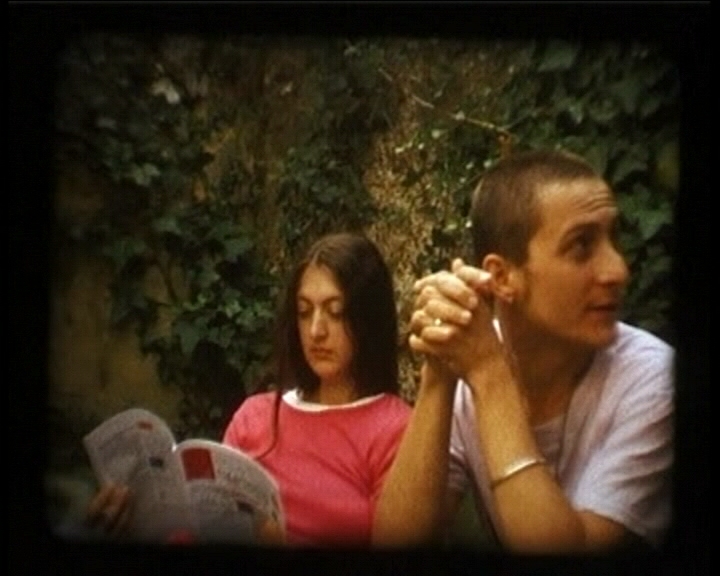
Diamond time, daimon time.
In the instant of diamond time duration incarnates and shatters itself. Many types of duration must exist, this seems to be true almost ‘by definition’. Duration is, after all, a multiplicity. Yet the time that fascinates, that holds attention and throws itself upon us, captures and eludes us, is predominantly the moments of diamond time, daimon time. We uncover these moments not through attention – our attention is always held by this time, this daimon diamond time – but through thought. We are forced to think, in the most perfect example of the forcing of thought, by this encounter with diamond time.
The eternal return is perhaps the most celebrated thought of the diamond time. The difficulty is often in extracting any sense of the eternal return from the peculiar and slight traces it left, not least in the peculiar way in which the eternal return is brought back to the moment, to the instant logical game of that which is both there and not there, here and not here. There is no instant of the eternal return since it shatters the moment and explodes the instant, taking us directly into the daimon of time, diamond time.
Time is not a passing, a going or an arriving. Time comes. When it has come it never goes. Almost no human being exists who has not yet had time come to them but there will be some, just as there will some plants, some rocks, some stars for whom time has not yet come – although it will. Aion sits softly on the lap of all and none may avoid the diamond time, no matter may avoid the daimon of time. Aion holds all in time and captures all, in time.
The encounter, however, is that which thought struggles to arrive at. To encounter time is to become shattered by it, at least at its most potent, in its daimon diamond form. We live as time, of course, we project the horizon of temporality up to and into the moment of the possibility of our impossibility but this living of time, this ecstatic temporality, always lacks that which it dismisses as impossible presence. The transcendental condition of ecstatic temporality is diamond time.
No doubt it is difficult to extract thought from its almost inevitable subsumption of diamond time into the subject. Kierkegaard perhaps offers the most abject lesson in this loss. The eternal, encountered as truth, God, Christ and the choice loses Aion in the incarnation of the daimon. We seem to be told that it must be the idea, that which is conjured into existence ex nihilo from the pure power of the subject and yet in this case the instant absorbs time rather than embracing it. It sucks up into the present the eternal that simply couldn’t be here in a moment. Diamond time is instead that which none want to encounter, the explosive truth.
-
Blu19
This is an old Real audio radio programme I made. I’ve been thinking of doing some more work with sound and so dug this out and had a listen and I still find it interesting, so it has an audience of 1 at least 😉
Blu19 real audio file (right click to save-as)
If anyone can convert it to an MP3 then that would be cool (I don’t have an app on my machine and am not about to buy one just for this one task).
(UPDATE – 2022 – In time all things come to pass – even file conversions…here’s an MP3 version of the piece. I’ve left the Real Media file here as archive, ML).
-
teaching the machine
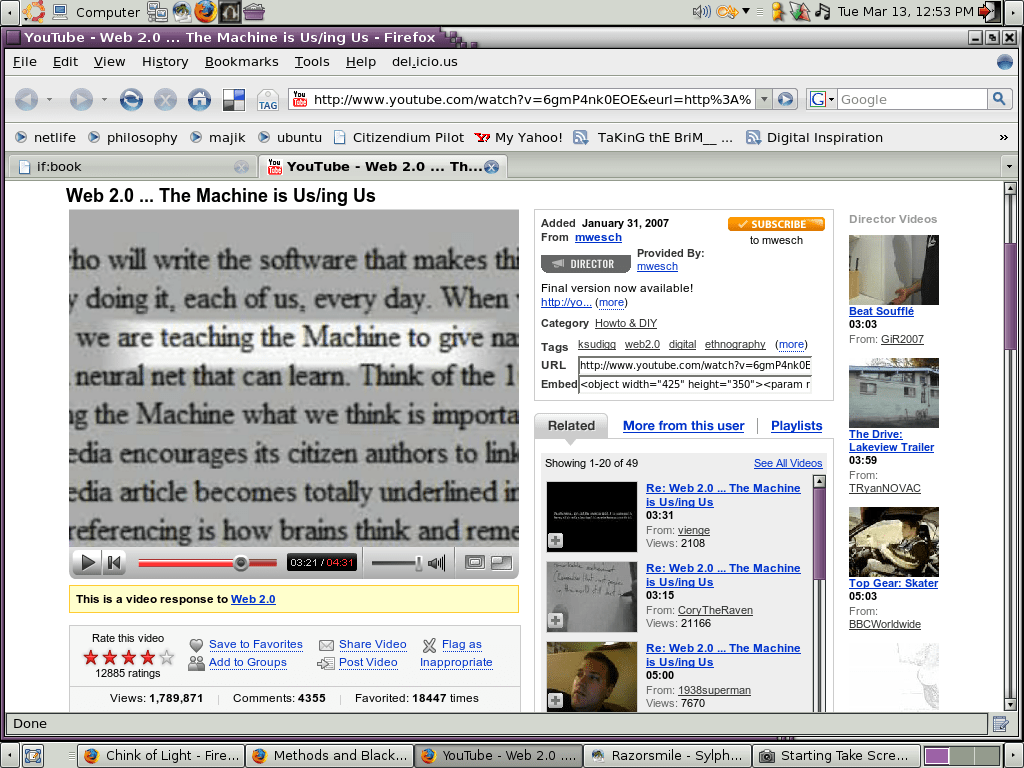
There’s this peculiar video that’s on YouTube at the moment, an excellent example of contemporary pedagogy in many ways, called ‘The machine is Us/ing Us’. It’s gathered nearly 2 million hits and since it’s only about 4 minutes long, probably most of those people have watched it. There’s a beautifully slick feel to the way the video performs itself. It’s about the ‘Web 2.0’ (the new ‘social web’) and it makes use of the text inputs we make on the ‘net all the time to mix and edit between them, presenting its ideas as the video progresses.
The main thesis seems quite basic, though one that needs to be kept in mind perhaps, and that is that the new forms of communication are not, in fact, communication but connection. They do not allow the easier flow of some pre-existing material but in fact constitute new material, new connections and new flows (even though they also might allow the easier flow of existing material). It seems reasonably positive, reasonably human, reasonably thoughtful. In effect I agree with what Michael Wesch says (the maker of the video and assistant professor of anthropology at Kansas Sate University). I also applaud his skill and ability to produce this piece. There was, however (of course there’ll be a ‘however’ 😉 one phrase that occurred that stuck in my mind and which seemed, how shall I say it, strange. It seemed, at the very least, strange. (more…)
-

Images of difference
On Wednesday this week (24th Jan) in the MA Seminar I spoke about the role of images within ‘Difference and Repetition’ (DR). They are important because the thought of difference that Deleuze is developing within DR is a ‘difference before identity’ and our thought patterns and culture are so imbued with ‘identity’ thinking that it can be strange to try and think of a primary ontological difference. The beginning of Chapter 1 of DR (Difference in itself) is ripe with a series of images, from the lightning flash, the black indeterminacy as against the white indeterminacy, as well as Goya and Odilon Redon in reference to ‘chiaroscuro’. The image here is from Odilon Redon and is called ‘The origin of vision’. In it I find something of this dark chaotic difference that is the primary ontological category and the ‘individuation’ (coming to be) of an object or organ before it’s integration into any sort of system of organisation that might constitute a ‘full identity’. The single eye and the feathered surroundings that appear like the eyelashes catch a sense of an almost fetishistic vision, one in which we catch sight of things not through a simple appearance but precisely because the thing, our interests and the relations between them constitute an individuation from out of a chaotic set of forces that is difference in itself.
(more…)




 razorsmile :: philosophy//magic //revolution