
As a pedagogic device for working on NVC the suggestion I made to my students is that a series of ‘themes’ are identified which then provide a backbone for ‘indexing’ some of the content with a view to building up a ground for exegetical work. The idea would be to take each theme – or at least a selection of them – and find relevant passages within the text in order to then have a focused selection from the text to think about. Obviously these themes interlock but the need to ‘ignore’ some things to focus on others is a methodological tool, enabling us to gain some focus before perhaps expanding again. (This is not, by any means, a comprehensive list of the themes that might be extracted from NVC, nor even a list of the themes which might be thought to be the ‘most central’ or ‘most obvious’. It arises from a particular class and discussion and as such is located in that context is intended to be added to and improved through discussion). (more…)
Blog
-

NVC Reading notes #4
 Klossowski – Nietzsche and the Vicious Circle – Reading notes for Ch.s 3-5
(These notes are partially exegetical for students and partially exploratory for myself).
CH3
The ‘Eternal Return’ is the thought experiment from Nietzsche, the central presentation of which is found in ‘The Gay Science’, S.341 and runs as follows:
‘The heaviest weight. – What if some day or night a demon were to steal into your loneliest loneliness and say to you: ‘This life as you now live it and have lived it you will have to live once again and innumerable times again; and there will be nothing new in it, but every pain and every joy and every thought and sigh and everything unspeakably small or great in your life must return to you, all in the same succession and sequence – even this spider and this moonlight between the trees, and even this moment and I myself. The eternal hourglass of existence is turned over again and again, and you with it, speck of dust!’ Would you not throw yourself down and gnash your teeth and curse the demon who spoke thus? Or have you once experienced a tremendous moment when you would have answered him: ‘You are a god, and never have I heard anything more divine.’ If this thought gained power over you, as you are it would transform and possibly crush you; the question in each and every thing, ‘Do you want this again and innumerable times again?’ would lie on your actions as the heaviest weight! Or how well disposed would you have to become to yourself and to life to long for nothing more fervently than for this ultimate eternal confirmation and seal?’
In the ‘Will to Power’ #1066 Nietzsche makes a more argumentative presentation although it is still in the form of a hypothetical, a thought experiment (note the opening – ‘If the world may be thought…’ which is akin to saying ‘Just suppose for the sake of argument…’ and then setting up an argument of the If…then… format which I have inserted into the text in italics in this case. If we pay attention to this way of arguing we can see that it is both very compressed and contains a chain of implications from a basic ontological model. The paragraph could be unpacked by trying to reconstruct the line or argument – in other words by trying to make explicit all possible suppressed premises.): (more…)
-
Philosophy in Second Life?
 I have popped in and out of Second Life at various points over the last four years and keep a client on my laptop which usually needs to be updated each time I log each because of the infrequency of those occasions. I love online environments in many ways but never found anything of any interest in SL, with the graphics being rather crappy and the whole interaction thing seeming to be dominated by rather puerile and sex-obsessed masturbators or geeks. I did hope to find places where there might be some interesting discussion, such as the Philosophy House for example, but they tended to disappoint and eventually I decided that it might simply be that I was not devoting enough time to breaking through the ‘n00b‘ barrier when it came to SL but I also knew that nothing motivated me to do so. Compared to Warcraft, for example, neither the ‘fun’ nor the desire element are there for me in SL. To be honest nothing I’d seen there impressed me culturally or intellectually either.
 I popped in again this week, having come across a piece online about a version of Macbeth and for once was pleased to have done so. A brief scoot around made me want to come back and that’s the first time I’ve actually been motivated to explore a little. TBH the interaction is pretty basic and some of the write-ups by the artist / constructor read like secondary school (High School?) teaching notes for the dumb but there is enough other material there to make me interested. It made me think again about what other things I might be missing, not least in terms of places where there might be some online philosophy discussion or collaborative work open to the general bod and so if anyone has any suggestions for interesting places to visit please drop me a SLURL in the comments or if you have an avatar and wanna offer some general advice I would love to hear from you. I don’t think it’s gonna take away from my time with Bauris and my other alts in Warcraft, but it would be interesting to finally find something in SL. I’m Razorsmile Hesse in SL btw…
-

NVC Reading notes #3
Reading Chapters 1 and 2 of NVC we come fully and squarely up against the peculiarity of Klossowski’s text. The discussion interprets and does so using a swathe of textual evidence but the interpretation is not a gentle teasing out of an argument, a kind of ‘efficient paraphrasing’, rather it is a positioned interpretation. That is, it offers a reading of Nietzsche that attempts to articulate a position with regards the body of Nietzsche’s work. That is to say, it both suggests a reading of Nietzsche that is a ’cause’ (ie; what Nietzsche says ‘comes first’ and our understanding is the effect of this) and it offers a reading of Nietzsche that makes Nietzsche an ‘effect’ of the reading (such that the reading ‘comes first’ and only through this reading do we come to understand Nietzsche). This curious ambiguity means that the reading is offering a ‘way of reading’. It is, as it were, intended to make us see Nietzsche’s work in a particular way. The danger, of course, is in distorting (‘doing violence to’) the Nietzschean corpus. The question is, what are we to make of Klossowski’s reading? If we were to assess it simply on its textual accuracy, whether it is that ‘efficient paraphrase’ so beloved of secondary academic texts (Introductions to …) then we would miss the performative aspect of Klossowski’s reading, the way in which he wants to do something with the corpus and make it do something anew. Of course we have to allow that Klossowski has a desire to bring some truth to light rather than assume he is trying to mislead us or merely ‘read Nietzsche for his own purposes’ but to do so we have to acknowledge that in some way it is only through making Nietzsche into his own that Klossowski can reveal something interesting about Nietzsche. It is because of this peculiar reciprocity between Nietzsche’s corpus and Klossowski’s reading of it that we should perhaps speak of the ‘Klossowskian-Nietzschean’ (K-N) account offered in NVC rather than think of the book as merely an ‘interpretation’ of Nietzsche in the weak sense of paraphrase.
What is it that Klossowski pushes to the fore then? There is a distrust of thinking as a pure and moral capacity within Klossowski that he wishes to draw out of Nietzsche and pursue. This is grounded in a tension between the individual as thinker and the society of which they are a product. The terms Klossowski uses are the gregarious and the singular (NVC: 4) where the gregarious is the name given to the social aspect and the singular the name given to that which opposes or comes into conflict with the social. The social is above all formed in the context of language, or the ‘code of everyday signs’ and the tension can be understood as one between an immediacy located in the ‘singularity that we are’ and a mediation of that singularity in the ‘code of everyday signs’. Roughly speaking we might think of this as a situation in which we are somehow trapped in language. Each time we try and think or express something, in particular each time we try and express our ‘depth’ (present the ‘true self that we are’, though this phrase is highly troublesome) we are betrayed by language.
This way of presenting things of course assumes that there is some way in which we are which can be betrayed. It would suggest, for example, that there is a real or true (we might say, following Heidegger, an ‘authentic’) self which we cover over and betray (fail to express) simply because any act of expression mediates the immediate. We might want to fall back on means of expression that aren’t linguistic and suggest that art, perhaps, is a means of authentic expression of the immediacy that is our depth precisely because it isn’t caught within the ‘code of everyday signs’. If we do this, however, we need to be careful to avoid an obvious problem – if we ‘read’ an artwork as expressing something more truthfully, and this ‘something’ is taken to be a meaning, then for Klossowski-Nietzsche it looks like we will fall back into the code of everyday signs because the code of everyday signs is not simply language but meaning itself. Meaning is mediation and any search for meaning falls into the position of betraying our depth which is outside of any meaning. Klossowski-Nietzsche claim that “our depth is unexchangeable because it does not signify anything” (NVC: 31). Are we not left at a dead-end then? Can we simply not say or express anything since there is no meaning? This would amount to a form of quietism, of a giving up in the face of a nihilistic understanding of life and the social. This, i think, would be a mistake and a mis-reading of K-N because it would make it difficult to understand the ‘combat’ which it seems is central to the ethical drive of NVC.
The first chapter, in which we find the ‘Combat against Culture’, supposes that there is something of interest in the conflict between the unexchangeable depth of the singular and the gregarious leveling of the social. If the social is a form of indoctrination, an imposition of a morality that commonly makes thinking and the thinker / philosopher into little more than lie-makers that produce ways in which the social can reproduce itself to the detriment of the singular, then where does the impulse or force of the singular come form. Do we posit something like an original singularity to each ‘subject’ which is then swallowed up in the social? Where did this singularity come from, what produced it? It would be a mistake, I believe, to attribute some ‘original subjectivity’ to K-N. Instead we will find the ‘depth’ described as chaos, as a flux or soup of impulses, a chaos that is formed into a singularity. The ‘formation’ of this singularity is what we need to investigate and what K-N will do so through the concept of ‘formations of sovereignty’ found later in NVC. Roughly speaking, the singular is nothing other than a formation of sovereignty in which one impulse (drive, force, instinct are all analogous concepts although not identical) triumphs over another. The “affects are enslaved by other affects – and not (at least not initially) by the affects of other individuals but by those within the same individual” (NVC: 10). It is not the social that ‘imposes’ itself on the singular but rather the singular that trains itself into becoming a ‘reasonable, rational and competent individual (member of society)’. We train ourselves to be slavish, we are not trained and imposed upon by some ‘oppressive’ force from outside. Consciousness triumphs over desire and we become reasonable people (NVC: 10).
(more on Ch 1 and 2 to come)
-
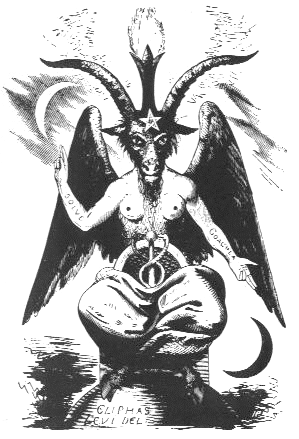
Constructing the ‘Three-letters’ into a contact
 One of the recent experimental workings that the meditation group engaged in was the ‘Three-letters’ working (which I posted about here) in which the Tree of Life was approached in a particular type of way. The intention of this working is to provide a means by which a practitioner can construct an imaginal means of learning the tree. No assumption is made about the reality or otherwise of entities and contacts, not least because worrying about reality is not something a magician should be doing – the practice of majik is pure experimentation with knowledge and experience, literally a matter of ‘make something up and see what happens’. The means of assessment of the success or otherwise of an experiment or working is difficult, although ‘consistency’ is a good rule of thumb. The greater the consistency of responses received the more powerful they become. In a sense ‘consistency’ produces a majikal reality – synchronicity, for example, is a form of consistency between situations and the ‘law of sympathy’ relies upon a consistency, a regularity or repetitive structure being formed such that a causality begins to emerge, albeit one that almost deliberately fucks up the ‘ground’ of such causality. If causality is of the form ‘do X, Y occurs’ then a fucked up causality retains this structure whilst simultaneously undermining it. There is no reason to majikal causality, merely consistency – it is this that makes it majikal.
The core of the Three-letter working is three journeys to the bottom supernal triad of the Tree of Life in which each sephiroth is meditated upon with a view to producing a single letter in each case. These three letters then form the name that is to be given to a contact or teacher or imaginal being who will be able to take the role of interlocutor in future exploration of the Tree. Produce a name to produce a conversation partner. There is a set of three path-workings available for the three sephiroth elsewhere on this site but having obtained three letters the next step is to call on the named entity. To that end the following pathworking is offered, a simple exercise adapted from R.J.Stewart’s books, Living Magical Arts. The exercise in that book (one I recommend highly, although it may read as slightly anachronistic nowadays, perhaps with a hint of ‘New Age’ christianity even) is called ‘Establishing an innerworld contact’ (pp195-198; Blandford 1987) which should be quite obviously seen as closely connected with the intentions of the Three-letter pathworking.
The Visualisation
(do whatever preparations you need in order to be able to concentrate clearly)
In front of you, in a dimly lit environment, is a door, a wooden arched door, above which is a lamp. Bring the door to clear vision, as clear as you can make it. When you feel calm and ready to meet the contact and the doorway is as vivid as you can make it push the door open and step underneath the lamp and through the doorway.
You are in a square courtyard, in the centre of which is a fountain. The door you have just stepped through is next to a tree, the courtyard is open to the sky and it is nighttime. On each of the four walls there is another tree, next to which there are doors. Four walls, four trees, four doors.
Begin to walk, slowly, around the courtyard. Continue walking until you feel settled and the courtyard, the trees, the doors and the fountain are as vivid as they can be. When you are ready move towards the fountain.
There is a wall around the fountain and you place you hands on the wall. You feel the stones beneath you skin. You hear the water. Close your eyes and allow yourself to do nothing but listen. When ready, open you eyes and draw on the wall the three letters you have brought with you. See them on the wall between you hands, make them come alive, glow and vibrate. Concentrate on the letters and keep this concentration – as you do so, you hear a door open and footsteps behind you. Stay focused on the name as the person who has entered the courtyard walks around you just as you did when entering, before they finally stop opposite you on the other side of the fountain.
Ask them if they are the person your three-letters name. Do not challenge them to prove it but trust yourself as to whether they are telling the truth. Once you are happy it is the contact, ask them any questions you want to, about the Tree or about anything else. Allow the conversation to flow until they stop it.
Close your eyes again and hold the wall, feeling the stone under your hands. The contact will leave. When they have gone, open your eyes, walk around the fountain and move towards one of the doors. Next to the door you have chosen you will see a symbol or mark of some sort to help you remember which door you use. Remember that sigil and then leave the courtyard, closing the door behind you and bringing yourself back to the here-and-now.
Use whatever techniques you prefer to ground yourself again and then make notes on anything interesting.
Rinse and repeat as necessary…
-

NVC Reading notes #2
If one of the first impressions on reading NVC is that something like a ‘psycho-analysis’ is being done then it is worth asking why this impression occurs and what relation to Freud exists. That it should be, in a sense, relatively uncontroversial to suggest NVC ‘reads like’ a psycho-analytic text comes from the emphasis of the biological, biographical and historical interpretation of ‘forces at work’ in Nietzsche, an emphasis on these bio-facts rather than on the texts that resulted. The texts are to be read as expressions of something underneath, something which we might encounter a little like we encounter the unconscious. Texts become symptoms to interpret, something with which to diagnose the ‘real’ or ‘important’ forces that are the ‘truth’ of Nietzsche’s work.
This, however, brings us close to one of the first difficulties. If we take a Freudian psycho-analytic interpretation to occur, as it were, from ‘outside’ the subject then close attention to Klossowski would suggest that the exact opposite is the practice of NVC. For example, in psycho-analytic practice / interpretation the relation of the analyst / interpreter to the analysand / interpreted is crucially important. The establishment of transference, the encounter with an ‘Other’ and the centrality of what i would call the ‘relation as revealing’ suggests a prime importance is given to a kind of sociality. We might say that for psychoanalysis, it is in our ‘being-with’ (mitsein) we find our being. The analyst / interpreter justifies their position on the basis that the addition of their position is necessary to establish this being-with which is a precondition of finding the truth of the analysand /interpreted. This sociality, this being-with, however, is a being-with of subjects and subjects are constituted as language speaking, meaning using beings. Being-with reveals being because it is a kind of ‘being with meaningful beings’. If this seems obscure then let me put it in more colloquial terms.
Take being-with to be ‘sociality’. The claim is something like ‘the way we are with others reveals the way we are’. Thus sociality is just this ‘being with others’ but it is in this ‘others’ that the presupposition can slip through, the metaphysical contraband. To see this think of the situation in which the others are animals, not ‘humans’. The distinction is important because it is as meaning using beings that we place ‘humans’ in a privileged and unthought position of social pre-eminence. Why is it, for example, that the dog you talk to or the cat you confess to cannot play the role of an analyst / interpreter? It is because they cannot offer this ‘mirror of meaning’, they cannot play the role of an analyst because they cannot talk. It is not what an analyst says, of course but the fact that they could say which enables them to play the role they do. It is not that the analysand talks which makes analysis the ‘talking cure’ but rather that the analysand talks to someone who can hear, by which we mean someone who can also talk (and talk back).
How, then, does NVC differ from psychoanalysis?
-
Welcome to the Civil War – Tarnac9 update
 Websites with information on the Tarnac9:
the US support committee – http://tarnac9.wordpress.com/
the main French support site – http://www.soutien11novembre.org/
fragments from ‘Introduction to Civil War’ – http://www.softtargetsjournal.com/v21/tiqqun.php
———————————-
1. The elementary human unity is not the body—the individual—but the form-of-life.
…
10. Civil war is the free play between forms-of-life; it is their principle of co-existence.
…
12. The point of view of civil war is the point of view of the political.
…
23. Hostility puts me at a distance from my own power.
…
72. The sphere of hostility can be reduced only by extending the ethico-political domain of friendship and enmity. This is why Empire has always failed to extend this domain, despite all its protestations in favor of peace. The becoming-real of the Imaginary Party is simply the formation—by contagion—of a plane of consistency where friendships and enmities can freely deploy themselves and make themselves legible to one another.
(from ‘Introduction to Civil War‘)
———————————-
-
Welcome to the Civil War – Tarnac9 update
Websites with information on the Tarnac9:
the US support committee – http://tarnac9.wordpress.com/
the main French support site – http://www.soutien11novembre.org/
fragments from ‘Introduction to Civil War’ – http://www.softtargetsjournal.com/v21/tiqqun.php
———————————-
10. Civil war is the free play between forms-of-life; it is their principle of co-existence.
…
12. The point of view of civil war is the point of view of the political.
(from ‘Introduction to Civil War‘)
———————————-
-
We Have Begun… FREE THE TARNAC 9 – A statement of support by Giorgio Agamben
 This is from Semiotext, via Fark Yaralar? = Scars of Différance. It is in reference to the arrest of people in France on ‘terrorist’ charges, notably of Julien Coupat from Tiqqun. The Tiqqun book, a small 88page book that fits in your back pocket and has been distributed free across Europe in recent months, is one of the most interesting and provocative political, philosophical texts to have arisen in the last 50 years. It marks a shift from the initial moves made by people such as Monsieur Dupont, to the beginnings of a strategic political position that looks testable and – perhaps more interestingly – worth testing. In the face of the current conjuncture of economic, political and philosophical tremors (albeit the latter in a reasonably disparate way, perhaps just another perturbation that is normal) this ‘Call’ is worth noticing.
 If anyone can translate from the French the short piece that is contained in this file – or has a French translation of it – that would be useful. In the meantime, perhaps something like Agamben’s public statement might be organised over in the UK or more widely.
………………
La_Fabrique.doc
A recent operation by the French police, intensively covered by the French and to some extent international media, ended in the arrest and indictment of nine people under anti-terrorist laws. The nature of this operation has already undergone a change: after the revelation of inconsistency in the accusation of sabotaging French railway lines, the affair took a manifestly political turn. According to the public prosecutor: “the goal of their activity is to attack the institutions of the state, and to upset by violence – I emphasize violence, and not contestation which is permitted – the political, economic and social order.”
The target of this operation is larger than the group of people who have been charged, against which there exists no material evidence, nor anything precise they can be accused of. The charge of “criminal association for the purposes of terrorist activity” is exceptionally vague: what constitutes “association”, and how are we to understand the reference to “purposes” other than as a criminalization of intention? As for the qualification “terrorist”, the enforced definition is so broad that it could apply to practically anything – and to possess such and such a text or to go to such and such demonstration is enough to fall under this exceptional legislation.
The individuals who have been charged were not chosen at random, but because they lead a political existence. They have participated in demonstrations, most recently against the less than honorable European summit on immigration in Vichy. They think, they read books, they live together in a remote village. There has been talk of clandestinity: they have opened a grocery store, everyone knows them in the region, where a support committee has been organized against their arrest. What they are looking for is neither anonymity nor refuge, but rather the contrary: another relation than the anonymous one of the metropolis. In the end, the absence of evidence itself becomes evidence against them: the refusal of those who have been charged to give evidence against one another during their detention is presented as a new indication of their terrorism.
In reality, this whole affair is a test for us. To what degree are we going to accept that anti-terrorism permits anyone to be arrested at any time? Where are we to place the limit of freedom of expression? Are emergency laws adopted under the pretext of terrorism and security compatible with democracy in the long term? Are we ready to let the police and the courts perform an about-turn in the direction of a new order? It is for us to respond to these questions, and first by demanding the end of these investigations and the immediate release of these nine people whose indictment is meant as an example for us all.
………………….
A statement of support by Giorgio Agamben is pasted in below.
TERRORISM OR TRAGICOMEDY?

On the morning of November 11, 150 police officers, most of which belonged to the anti-terrorist brigades, surrounded a village of 350 inhabitants on the Millevaches plateau, before raiding a farm in order to arrest nine young people (who ran the local grocery store and tried to revive the cultural life of the village). Four days later, these nine people were sent before an anti-terrorist judge and “accused of criminal conspiracy with terrorist intentions.” The newspapers reported that the Ministry of the Interior and the Secretary of State “had congratulated local and state police for their diligence.” Everything is in order, or so it would appear. But let’s try to examine the facts a little more closely and grasp the reasons and the results of this “diligence.”
First the reasons: the young people under investigation “were tracked by the police because they belonged to the ultra-left and the anarcho autonomous milieu.” As the entourage of the Ministry of the Interior specifies, “their discourse is very radical and they have links with foreign groups.” But there is more: certain of the suspects “participate regularly in political demonstrations,” and, for example, “in protests against the Fichier Edvige (Exploitation Documentaire et Valorisation de l’Information Générale) and against the intensification of laws restricting immigration.” So political activism (this is the only possible meaning of linguistic monstrosities such as “anarcho autonomous milieu”) or the active exercise of political freedoms, and employing a radical discourse are therefore sufficient reasons to call in the anti-terrorist division of the police (SDAT) and the central intelligence office of the Interior (DCRI). But anyone possessing a minimum of political conscience could not help sharing the concerns of these young people when faced with the degradations of democracy entailed by the Fichier Edvige, biometrical technologies and the hardening of immigration laws.
As for the results, one might expect that investigators found weapons, explosives and Molotov cocktails on the farm in Millevaches. Far from it. SDAT officers discovered “documents containing detailed information on railway transportation, including exact arrival and departure times of trains.” In plain French: an SNCF train schedule. But they also confiscated “climbing gear.” In simple French: a ladder, such as one might find in any country house.
Now let’s turn our attention to the suspects and, above all, to the presumed head of this terrorist gang, “a 33 year old leader from a well-off Parisian background, living off an allowance from his parents.” This is Julien Coupat, a young philosopher who (with some friends) formerly published Tiqqun, a journal whose political analyses – while no doubt debatable – count among the most intelligent of our time. I knew Julien Coupat during that period and, from an intellectual point of view, I continue to hold him in high esteem.
Let’s move on and examine the only concrete fact in this whole story. The suspects’ activities are supposedly connected with criminal acts against the SNCF that on November 8 caused delays of certain TGV trains on the Paris-Lille line. The devices in question, if we are to believe the declarations of the police and the SNCF agents themselves, can in no way cause harm to people: they can, in the worst case, hinder communications between trains causing delays. In Italy, trains are often late, but so far no one has dreamed of accusing the national railway of terrorism. It’s a case of minor offences, even if we don’t condone them. On November 13, a police report prudently affirmed that there are perhaps “perpetrators among those in custody, but it is not possible to attribute a criminal act to any one of them.”
The only possible conclusion to this shadowy affair is that those engaged in activism against the (in any case debatable) way social and economic problems are managed today are considered ipso facto as potential terrorists, when not even one act can justify this accusation. We must have the courage to say with clarity that today, numerous European countries (in particular France and Italy), have introduced laws and police measures that we would previously have judged barbaric and anti-democratic, and that these are no less extreme than those put into effect in Italy under fascism. One such measure authorizes the detention for ninety-six hours of a group of young – perhaps careless – people, to whom “it is not possible to attribute a criminal act.” Another, equally serious, is the adoption of laws that criminalize association, the formulations of which are left intentionally vague and that allow the classification of political acts as having terrorist “intentions” or “inclinations,” acts that until now were never in themselves considered terrorist.
— Giorgio Agamben
Libération, November 19, 2008 -
We Have Begun… FREE THE TARNAC 9 – A statement of support by Giorgio Agamben
 This is from Semiotext, via Fark Yaralar? = Scars of Différance. It is in reference to the arrest of people in France on ‘terrorist’ charges, notably of Julien Coupat from Tiqqun. The Tiqqun book, a small 88page book that fits in your back pocket and has been distributed free across Europe in recent months, is one of the most interesting and provocative political, philosophical texts to have arisen in the last 50 years. It marks a shift from the initial moves made by people such as Monsieur Dupont, to the beginnings of a strategic political position that looks testable and – perhaps more interestingly – worth testing. In the face of the current conjuncture of economic, political and philosophical tremors (albeit the latter in a reasonably disparate way, perhaps just another perturbation that is normal) this ‘Call’ is worth noticing.
If anyone can translate from the French the short piece that is contained in this file – or has a French translation of it – that would be useful. In the meantime, perhaps something like Agamben’s public statement might be organised over in the UK or more widely.
………………
La_Fabrique.doc
A recent operation by the French police, intensively covered by the French and to some extent international media, ended in the arrest and indictment of nine people under anti-terrorist laws. The nature of this operation has already undergone a change: after the revelation of inconsistency in the accusation of sabotaging French railway lines, the affair took a manifestly political turn. According to the public prosecutor: “the goal of their activity is to attack the institutions of the state, and to upset by violence – I emphasize violence, and not contestation which is permitted – the political, economic and social order.”
The target of this operation is larger than the group of people who have been charged, against which there exists no material evidence, nor anything precise they can be accused of. The charge of “criminal association for the purposes of terrorist activity” is exceptionally vague: what constitutes “association”, and how are we to understand the reference to “purposes” other than as a criminalization of intention? As for the qualification “terrorist”, the enforced definition is so broad that it could apply to practically anything – and to possess such and such a text or to go to such and such demonstration is enough to fall under this exceptional legislation.
The individuals who have been charged were not chosen at random, but because they lead a political existence. They have participated in demonstrations, most recently against the less than honorable European summit on immigration in Vichy. They think, they read books, they live together in a remote village. There has been talk of clandestinity: they have opened a grocery store, everyone knows them in the region, where a support committee has been organized against their arrest. What they are looking for is neither anonymity nor refuge, but rather the contrary: another relation than the anonymous one of the metropolis. In the end, the absence of evidence itself becomes evidence against them: the refusal of those who have been charged to give evidence against one another during their detention is presented as a new indication of their terrorism.
In reality, this whole affair is a test for us. To what degree are we going to accept that anti-terrorism permits anyone to be arrested at any time? Where are we to place the limit of freedom of expression? Are emergency laws adopted under the pretext of terrorism and security compatible with democracy in the long term? Are we ready to let the police and the courts perform an about-turn in the direction of a new order? It is for us to respond to these questions, and first by demanding the end of these investigations and the immediate release of these nine people whose indictment is meant as an example for us all.
………………….
A statement of support by Giorgio Agamben is pasted in below.
TERRORISM OR TRAGICOMEDY?

On the morning of November 11, 150 police officers, most of which belonged to the anti-terrorist brigades, surrounded a village of 350 inhabitants on the Millevaches plateau, before raiding a farm in order to arrest nine young people (who ran the local grocery store and tried to revive the cultural life of the village). Four days later, these nine people were sent before an anti-terrorist judge and “accused of criminal conspiracy with terrorist intentions.” The newspapers reported that the Ministry of the Interior and the Secretary of State “had congratulated local and state police for their diligence.” Everything is in order, or so it would appear. But let’s try to examine the facts a little more closely and grasp the reasons and the results of this “diligence.”
First the reasons: the young people under investigation “were tracked by the police because they belonged to the ultra-left and the anarcho autonomous milieu.” As the entourage of the Ministry of the Interior specifies, “their discourse is very radical and they have links with foreign groups.” But there is more: certain of the suspects “participate regularly in political demonstrations,” and, for example, “in protests against the Fichier Edvige (Exploitation Documentaire et Valorisation de l’Information Générale) and against the intensification of laws restricting immigration.” So political activism (this is the only possible meaning of linguistic monstrosities such as “anarcho autonomous milieu”) or the active exercise of political freedoms, and employing a radical discourse are therefore sufficient reasons to call in the anti-terrorist division of the police (SDAT) and the central intelligence office of the Interior (DCRI). But anyone possessing a minimum of political conscience could not help sharing the concerns of these young people when faced with the degradations of democracy entailed by the Fichier Edvige, biometrical technologies and the hardening of immigration laws.
As for the results, one might expect that investigators found weapons, explosives and Molotov cocktails on the farm in Millevaches. Far from it. SDAT officers discovered “documents containing detailed information on railway transportation, including exact arrival and departure times of trains.” In plain French: an SNCF train schedule. But they also confiscated “climbing gear.” In simple French: a ladder, such as one might find in any country house.
Now let’s turn our attention to the suspects and, above all, to the presumed head of this terrorist gang, “a 33 year old leader from a well-off Parisian background, living off an allowance from his parents.” This is Julien Coupat, a young philosopher who (with some friends) formerly published Tiqqun, a journal whose political analyses – while no doubt debatable – count among the most intelligent of our time. I knew Julien Coupat during that period and, from an intellectual point of view, I continue to hold him in high esteem.
Let’s move on and examine the only concrete fact in this whole story. The suspects’ activities are supposedly connected with criminal acts against the SNCF that on November 8 caused delays of certain TGV trains on the Paris-Lille line. The devices in question, if we are to believe the declarations of the police and the SNCF agents themselves, can in no way cause harm to people: they can, in the worst case, hinder communications between trains causing delays. In Italy, trains are often late, but so far no one has dreamed of accusing the national railway of terrorism. It’s a case of minor offences, even if we don’t condone them. On November 13, a police report prudently affirmed that there are perhaps “perpetrators among those in custody, but it is not possible to attribute a criminal act to any one of them.”
The only possible conclusion to this shadowy affair is that those engaged in activism against the (in any case debatable) way social and economic problems are managed today are considered ipso facto as potential terrorists, when not even one act can justify this accusation. We must have the courage to say with clarity that today, numerous European countries (in particular France and Italy), have introduced laws and police measures that we would previously have judged barbaric and anti-democratic, and that these are no less extreme than those put into effect in Italy under fascism. One such measure authorizes the detention for ninety-six hours of a group of young – perhaps careless – people, to whom “it is not possible to attribute a criminal act.” Another, equally serious, is the adoption of laws that criminalize association, the formulations of which are left intentionally vague and that allow the classification of political acts as having terrorist “intentions” or “inclinations,” acts that until now were never in themselves considered terrorist.
— Giorgio Agamben
Libération, November 19, 2008


 razorsmile :: philosophy//magic //revolution
