Author: Razorsmile

  • Leibniz, necessity, god

    Leibniz, necessity, god

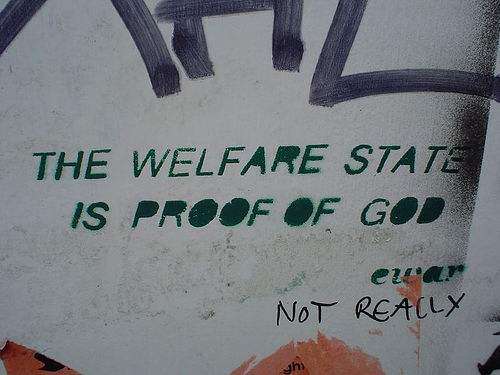
    DSC01952_33863989Philosophers no longer talk about God and if they do nobody listens. At the time of Leibniz and the Enlightenment the reverse was the case – philosophers always talked about God and if they didn’t then nobody listened. This, no doubt, was a hangover from the impregnation of Christianity that occurred in the middle ages, during which time the bastard child of philosophy and Christian apologetics is produced, what Heidegger would later call ‘onto-theology’. Being (the ontos) is spoken of within the framework of God. This is the butchery of philosophy by Augustine and Aquinas, the butchery of pagan thought by monotheistic madness. A language and framework that is in effect absent from the initial movements of Socrates and Plato comes to dominate any attempt to think. To think without God becomes, by the time of the Leibniz, almost impossible. At the same time, to think with God also becomes almost impossible. Thought is threatened by God since metaphysical abstractions now implicate God. The situation is analogous to artists under Stalin’s regime. To speak is to speak of God – or Stalin – and so to speak is to invoke danger and attention, not always a good idea.

    At the heart of Leibniz is a peculiar pairing of two seemingly opposed ideas that produces a problem. On the one hand there is the idea that the world – Being – must have a necessity to the way it is. On the other hand there is the idea that God – the supreme Being – must be free and ultimately unconstrained by anything, including any necessities of mere matter. We can encounter this problem in the following way. Let us assume that God exists and has created the world, indeed all of Being. Let us also assume, following Leibniz for a while, that the world which exists is ‘the best possible world’. Now Leibniz wants to argue that the world is the best possible world because it must be the best possible world – it is not the best by accident but because only the best possible world could exist. Thus, if God created the world and it is the best possible world is it the best possible world because God created it or did God create it because it is the best possible world.

    The problem is right here – was God forced by ‘some sort of necessity’ to create the world as it is because it is the best possible world that there could be? Did God have no choice over how the world is – or even that the world is? If this is the case, then God is powerless in the face of this necessity – nothing more than an empty origin.

    The situation gets worse, however, if we try and say that the world is the best possible world because God created it. If God is free to create any world and the world that is created is the best possible world then we can ask why is this world better than any other? It must be because God chose the best, between more than one option– but for it to be the best there must be some reason that can be given, it must be more than a mere whim of God. God, then, becomes again subject to the reason behind the choice of one world over another and couldn’t have acted freely if he acted rationally since he would have had no choice. Alternatively the world is a mere whim and in that case it cannot be said to be in any real sense the best. Either the world has a necessity – in which case God is subject to that necessity – or it is a mere whim, in which case it might very well have been different, indeed it might still now be very different from the way we experience it. If the world is a whim of God we are left with the problem of the Caliph’s vision1.

    It’s not just Leibniz who works with this difficulty. In Descartes too we find the problem of why and how God relates to Being. If God is given complete freedom then what’s to stop him from having a huge joke at our expense? What prevents God from making the false seem true and the true seem false, from making the appearance radically different from the reality? If we respond, because God is good, then surely if God is good he would have created the best of all possible worlds and then we are back to the lack of freedom on the part of God. God is free and the world is possibly a joke or the world is necessarily the way it must be – the best – and thus God is no more and no less free in his creativity than the mathematician is in the production of a solution to a given problem.

    1 Nicholas Rescher, following Bertrand Russell, poses the problem as a formal dilemma and as follows – ‘According to the Principle of Perfection [what I have been referring to here as ‘the best of all possible worlds] God acts in the most perfect way possible with regard to the creation of the world, and he does so either necessarily or freely. If he does so necessarily his freedom is destroyed, and all that follows as a result of his perfection – i.e., everything that happens in the world – is necessary. If he does so freely, in accord with Leibniz’s principle, a sufficient reason must be adduced for this free act, and this in turn must be either free or necessitated. Thus an infinite regress is initiated.’ (Rescher, 1967: 43-44) Rescher’s formulation of the formal problem (that of an infinite regress) avoids the problem of the powers or forces at play in the inter-relation between the concepts of God and Necessity.
  • Hekate Ceridwen resonance

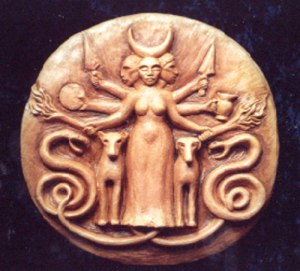
    HekateFrom Wikipedia, regarding Ceridwen:

    “In Welsh medieval legend, Ceridwen was an enchantress, mother of Morfran and a beautiful daughter Creirwy. Her husband was Tegid Foel, and they lived near Bala Lake (Llyn Tegid) in north Wales. Medieval Welsh poetry refers to her as possessing the cauldron of Poetic Inspiration (Awen) and the Tale of Taliesin recounts her swallowing her servant Gwion Bach who is then reborn through her as the poet Taliesin.”

    From Timelessmyths, regarding Hekate:

    “According to the Sicilian historian, Diodorus Siculus, in his account about Jason and the Argonauts, Hecate was not a goddess, but a Taurian sorceress, daughter of Perses, king of Tauric Chersonese, and grand daughter of Helius. Hecate was known for her cruelty, and she had poisoned her father and married her uncle, Aeetes, king of Colchis. Hecate became the mother of Circe and Medea. As a high priestess of the Taurian Artemis, she advocated the sacrifices of all strangers who come to Colchis.”

  • Hekate working (#1) – Hekate’s Fountain

    DSC00584

    The three of us process separately down to the fountain, gathering after dark on the steps that surround it.  Sunday evening activity surrounds the area, people wandering to and fro.  Just behind the tree a fence twists around the park, surrounding a food festival of some sort that was there during the day.  The air is clear and the anxiety that has been with me for the last couple of hours, along with the headache, are beginning to subside.  The moon is dark above us. ‘nightgoing one, disheveled one of compelling countenance’

    I mark the 3-turn labyrinth on the steps, mistakenly closing it on the first drawing, so I rub open the first turn, with my finger roughly caressing the paving stone.  The rubbish is strewn through the fountain, now silent and dark.  The water appears to have something like an oil surface, shining rich deep black.  The rams horn which has my libation in it stinks, the water having taken the inside of the horns essence over the last couple of weeks.  It matches the water in the fountain.  ‘daughter of perses, lover of the wilderness who exults among the deer’.

    We gather before the steps, placing a lantern on each of the three stepping stones, the light vibrant.  One of us has a dog and full hands, so a brief re-arrangement of items – libations, prayers and dogs – before we begin to circle, whispering her name over and over, first one way, turn, then another, turn, laughter and smiling, then the last turn and now we stand.  Invocation…’beloved hekate, of the crossroads and threeways, saffron cloaked goddess of the heavens, the underworld and the sea’

    The water pours in a thick strong stream into the fountain.  Mixing the sources and offering simple time and effort and devotion.  No piety, simple acts and words.  A small fetish for demeter is placed at the centre, another 3-turn labyrinth marked in chalk and then we all stand, arms outstretched in front, as we intone laguz.  Smiles and banish with laughter, before we mill around, during which time I push a small key into the ground before eventually walking home for wine, incense and talk. ‘tauropolous, keyholding mistress of the whole world, maiden, nymph, mountain wandering nurturer of youth, we beg you be present at our rites…’.

  • Diamond time, daimon time.

    Diamond time, daimon time.

    In the instant of diamond time duration incarnates and shatters itself. Many types of duration must exist, this seems to be true almost ‘by definition’. Duration is, after all, a multiplicity. Yet the time that fascinates, that holds attention and throws itself upon us, captures and eludes us, is predominantly the moments of diamond time, daimon time. We uncover these moments not through attention – our attention is always held by this time, this daimon diamond time – but through thought. We are forced to think, in the most perfect example of the forcing of thought, by this encounter with diamond time.

    The eternal return is perhaps the most celebrated thought of the diamond time. The difficulty is often in extracting any sense of the eternal return from the peculiar and slight traces it left, not least in the peculiar way in which the eternal return is brought back to the moment, to the instant logical game of that which is both there and not there, here and not here. There is no instant of the eternal return since it shatters the moment and explodes the instant, taking us directly into the daimon of time, diamond time.

    Time is not a passing, a going or an arriving. Time comes. When it has come it never goes. Almost no human being exists who has not yet had time come to them but there will be some, just as there will some plants, some rocks, some stars for whom time has not yet come – although it will. Aion sits softly on the lap of all and none may avoid the diamond time, no matter may avoid the daimon of time. Aion holds all in time and captures all, in time.

    The encounter, however, is that which thought struggles to arrive at. To encounter time is to become shattered by it, at least at its most potent, in its daimon diamond form. We live as time, of course, we project the horizon of temporality up to and into the moment of the possibility of our impossibility but this living of time, this ecstatic temporality, always lacks that which it dismisses as impossible presence. The transcendental condition of ecstatic temporality is diamond time.

    No doubt it is difficult to extract thought from its almost inevitable subsumption of diamond time into the subject. Kierkegaard perhaps offers the most abject lesson in this loss. The eternal, encountered as truth, God, Christ and the choice loses Aion in the incarnation of the daimon. We seem to be told that it must be the idea, that which is conjured into existence ex nihilo from the pure power of the subject and yet in this case the instant absorbs time rather than embracing it. It sucks up into the present the eternal that simply couldn’t be here in a moment. Diamond time is instead that which none want to encounter, the explosive truth.

  • Monadic soap bubbles and Umwelts

    Monadic soap bubbles and Umwelts

    Robert Vallier reviews what looks like a fascinating book, Brett Buchanans’, Onto-Ethologies: The Animal Environments of Uexküll, Heidegger, Merleau-Ponty, and Deleuze.  During the course of the review the following struck me:

    The animal has an Umwelt, surrounding and enclosing it, much like a soap bubble. Each animal has its own Umwelt, and one soap bubble may enclose many others within it or be enclosed in other, larger bubbles. Unlike Leibniz’s monads, these bubbles have windows, or at least intersect and interact with each other in concrete ways. The Umwelt is not merely given, but rather produced by the animal through the functioning of its body, its sensory and instinctual apparatus, and the objects it encounters. Uexküll devotes years of his productive life to the study of the Umwelt, its formation, and how it constitutes a ground for understanding animal being. From this research, several astonishing examples emerge, most famously the behavior of the tick; but more than that, two major theoretical constructs also come to the fore. First, the plan of nature constitutes a kind of melody. An extensive musical metaphor or “theory of the music of life” runs throughout Uexküll’s work, and later becomes important to Merleau-Ponty later on. Buchanan neatly summarizes and translates the metaphors, but misses an opportunity to return to and evaluate another philosophical source for Uexküll, namely, Leibniz. The soap bubbles may not be monads, but they exist in a kind of pre-established harmony in the composition of nature. It is this harmonious composition that constitutes the plan of nature, or better, the plan is a kind of musical score. Deleuze later characterized Uexküll as a “Spinozist of affects.” Given this, it seems that the background of modern philosophy from Descartes to Kant would be a particularly fecund area to mine in order to understand better the rise of modern biology. Buchanan can’t be faulted for not developing this background, for to do so would have doubled the manuscript. While some mention of it could have been helpful, the absence of it stands as an invitation to his readers to engage in further research in this direction.

  • Waving to Nicholas McClintock

    nicolas-mcclintock-1

    The reading group on The Fold progresses well, with a core of 6 people attending and a rhythm to the sessions as we work through various moments in each chapter before trying to establish something like a broader ‘shape’.  Yesterday’s session focused on Chapter 5, ‘Incompossibility, Individuality, Liberty’, where the text moves onto a different terrain from the ‘ontological’ pure and simple.  The famous example of ‘Adam the sinner’ and the world in which he sins being the best possible world is what the chapter opens with and the dynamic is to work from the concept of incompossibility through to the ‘moral’ problem addressed by the Theodicy.  The chapter title, naming these three peculiar concepts, tracks this trajectory.

    As usual we retired to the Amersham Arms after the session for a pint or two and a decompression, finding ourselves drinking in the outside garden, a kind of side alley to the pub strewn with a vibrant graffiti art exhibition.  Towards the end of the reading session I had increasingly questioned the viability of the account of morality that Deleuze draws and we had encountered one of the perennial questions of Deleuze scholarship and discussion – does a Deleuzian ontology exhibit a kind of moral injunction to radical lifestyle?  There is a reading of Deleuze, that is now frowned upon perhaps, which used to take the work of Deleuze and use it to justify ‘extremities’ of lifestyle – wine and strange drugs as a means to ontological intellectual intuition.  It’s doubtful that it much matters whether this is an ‘accurate’ reading of Deleuze since it is no doubt possible to draw upon his work to either justify or berate such a lifestyle, such means of knowledge.  It is clear, even from just this chapter of F, that there is some sort of injunction that can be drawn from Deleuze, an injunction that is found here in the form of ‘increase the clear region of your monad’.  Take the following for example:

    (more…)

  • ‘an active line on a walk’ (The Fold – reading notes #2)

    ‘an active line on a walk’ (The Fold – reading notes #2)

    veiled+lady_485041815

    Chapter 2 of F begins, if possible, even more obscurely than Chapter 1.  The first line of F, Chapter 1, is ‘The Baroque refers not to an essence but rather to an operative function, to a trait’ (F:3).  This might be a dense sentence in that it’s implications will need to be unpacked and explored but compared to the first sentence of Chapter 2 it seems relatively transparent.

    ‘Inflection is the ideal genetic element of the variable curve or fold.’ (F:14)  So begins Chapter 2.  It continues – ‘Inflection is the authentic atom, the elastic point.  This is what Klee extracts as the genetic element of the active, spontaneous line’ (ibid).

    One of my fellow readers at the group had done some useful background research and traced the diagram or illustration that occurs at the beginning of Chapter 2 (F:15), tracking it to Klee’s ‘Pedagogical Notebooks’ where I didn’t notice any immediate reference to inflection but where the curve is described as ‘an active line on a walk for a walk’s sake’, which a number of us commented on as it seemed close to the image of the schizophrenic on a walk that Deleuze and Guattari use at the beginning of Anti-Oedipus.

    These ‘backgrounds’ that can be filled in by tracking down some of the more allusive and elusive sources that fill Deleuze’s work help in the activity of familiarising ourselves with the text.  In particular the diagram, which stands in the text unsourced, becomes less random and seems located, allowing us to feel like there is a work of unpacking to be done in reading F that is not without some point or purpose – that we’re not, as it were, on a wild goose chase.  Nothing in the Klee reference, however, immediately illuminates quite what this notion of ‘inflection’ is doing here.

    Another reader had tracked down some background that more specifically focused on the meaning of inflection, tracking it to a a possible geometric source where we can find that there is a use within the realm of differential calculus, where an inflection (inflexion) point has a specific role to play.  Now it is not the case that the geometric usage needs to tally with the claim Deleuze makes (‘Inflection is the ideal genetic element of the variable curve or fold.’) since it is not a geometric claim that is being presented, at least I am not taking it to be such.  It is rather a philosophical claim.  It is clear from the presentation that it is Klee, not geometry, which Deleuze is drawing on and moreover it is Klee’s ‘methodological’ or ‘philosophical’ comments. Quite what philosophical claim is it, however, that Deleuze is attempting to put forward?

    (more…)

  • ‘…souls are everywhere in matter.’ (The Fold – reading notes #1)

    ‘…souls are everywhere in matter.’ (The Fold – reading notes #1)

    Notes on Deleuze’s ‘The Fold’ resulting from the work being done as I attend the excellent new reading group hosted by Matthew Dennis at Goldsmiths College, with thanks to him for the opportunity to study the work and for the others at the group for stimulating and interesting conversations.

    Matthew Dennis made some introductory remarks when we first met for the reading group and noted that one of the first things encountered in the book is the architectonic metaphor of the room with two levels.  Dennis rightly, I think, drew our attention to the way this particular image can stand in conversation with the Platonic cave.  We can articulate two philosophical dynamics or views by allowing these images to stand as the organising centres of thought.

    Curiously I had tended to glide over the image on this reading of the text.  I’ve read ‘The Fold’ numerous times before, only gradually getting to grips with its peculiarities and only recently feeling even slightly familiar in its surroundings.  The familiarity of the image had perhaps encouraged its disappearance in my horizon, in that common effect of presentation whereby the common becomes the invisible.  It was good to have this foregrounded, therefore and in the course of such foregrounding to have my own familiarities de-familiarised.  I had been reading straight past the image – but what then had I been reading?

    (more…)

  • Tarnac 9 make the Bartleby move

    Confronted by an ever more absurd state power, we shall speak no more
    LE MONDE | 16.03.09

    bwo Multitudes-infos list/ Frederic Neyrat

    bwo the nettime list / trans Patrice Riemens

    For four month now, the legal & media spectacle titled “The Tarnac affair” won’t come to an end. Was Julien Coupat to come out of prison for Christmas? For New Year’s Eve then? Or would Friday the 13th be his lucky day? No. In the end ‘we’ will keep him a bit longer in jail, locked into his new role as ‘leader of an invisible cell’.

    Since a few people in power appear to have an interest in letting this charade go on, even beyond the limits of the grotesque, for the sake of collective clarification, we will have to take once more the garb that has been knit for us (“the 9 from Tarnac”).

    Well then.

    Firstly. As journos were burrowing into our garbage cans, the cops were fingering our assholes. Not the funniest of experience. For months you have been opening our mail, eavesdropping our phones, harassing our friends and video-tapping our homes. And you delectate in these actions. We, the ‘nine’, we endure them, like so many others. We have been atomised by judicial procedures, nine times one single individual, whereas you are one administration, one police force, and the one and whole logic of one system. As we stand now, we have been double-dealt, and the stake is already erected. So please don’t expect us to play cricket. (more…)